Meta Description:
Primary Keywords:
Long-Tail Keywords:
The rapid development of artificial intelligence, large language models, cloud computing, and data centers is making computing infrastructure a critical foundation of the digital economy. Large data centers, intelligent computing centers, and computing parks serving industrial, transportation, energy, and research applications all require a stable, continuous, and scalable power supply.
Computing facilities place demanding requirements on power continuity. Servers, storage systems, cooling equipment, and supporting systems must operate reliably over long periods. Any instability in the power supply chain can affect business continuity and data processing performance. As a result, transmission towers used for power connections, transmission line construction, and park expansion must meet structural and safety requirements while also supporting efficient construction, environmental adaptability, convenient maintenance, and practical project schedules.
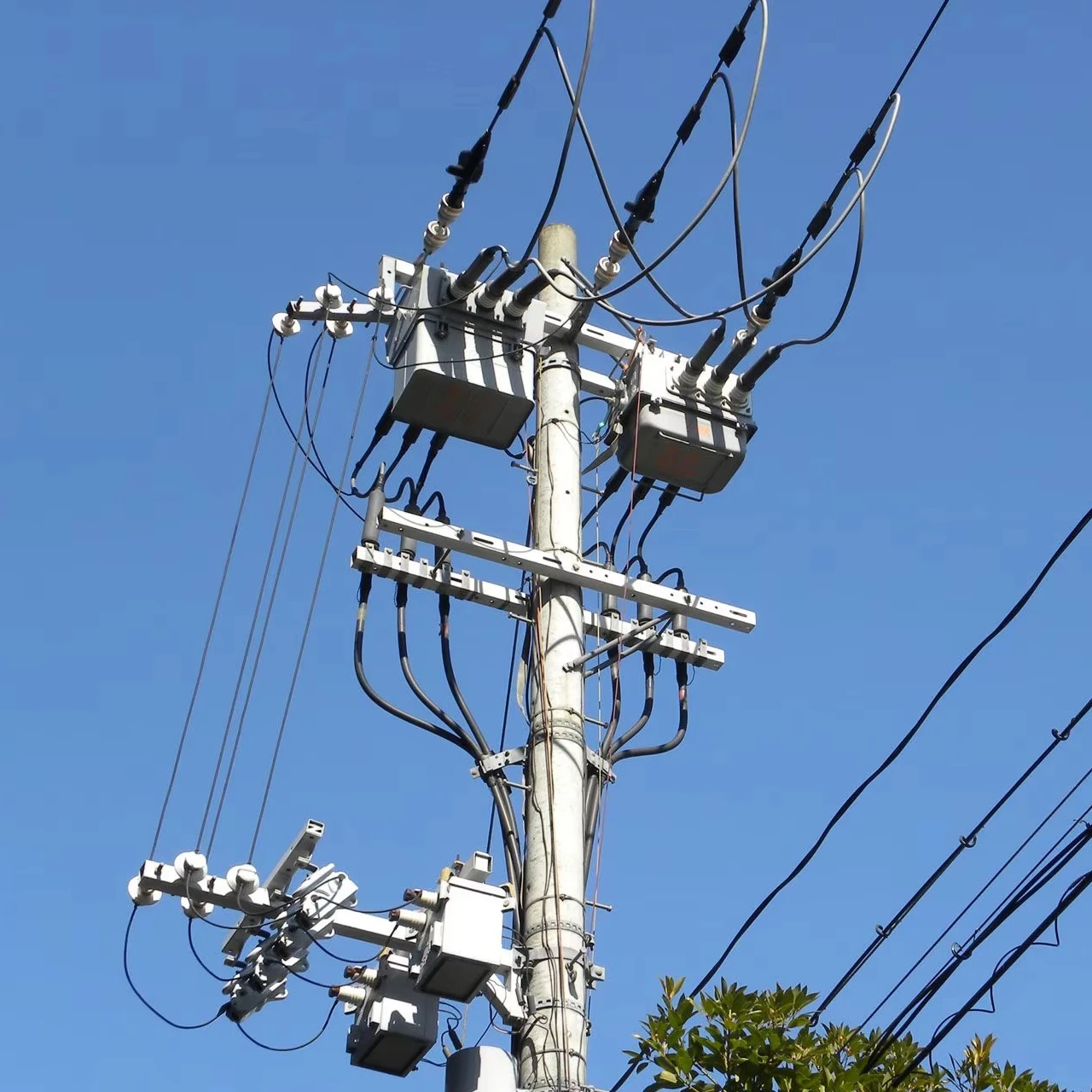
With their compact structure, relatively small footprint, clean appearance, and flexible design options, power single-pole transmission towers are becoming an important solution for selected urban grid, industrial park, and power expansion projects. For power projects supporting AI computing development, the proper use of single-pole transmission towers can help build a more reliable, efficient, and scalable power transmission system.
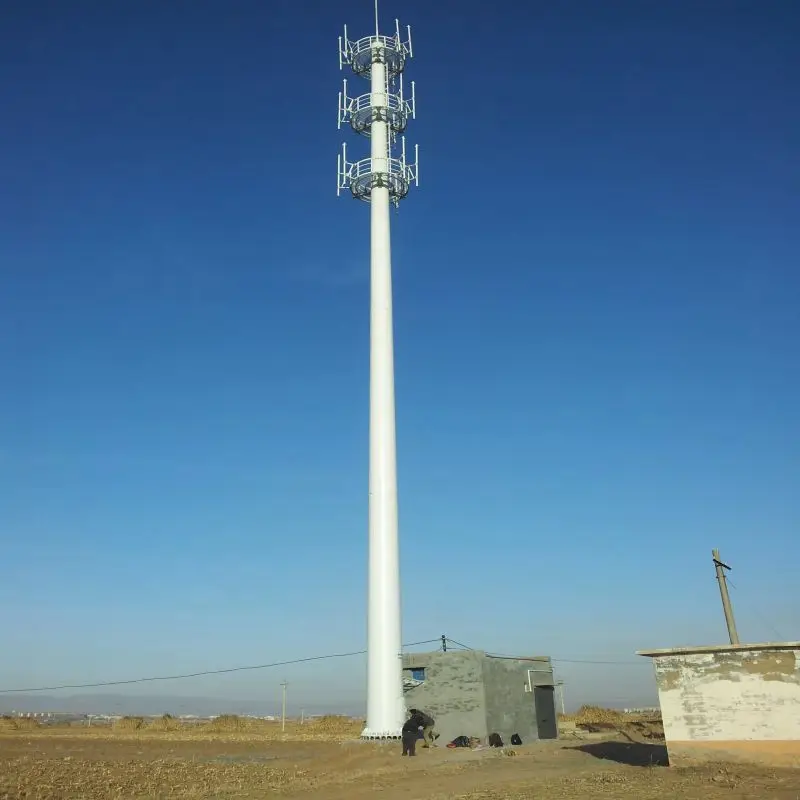
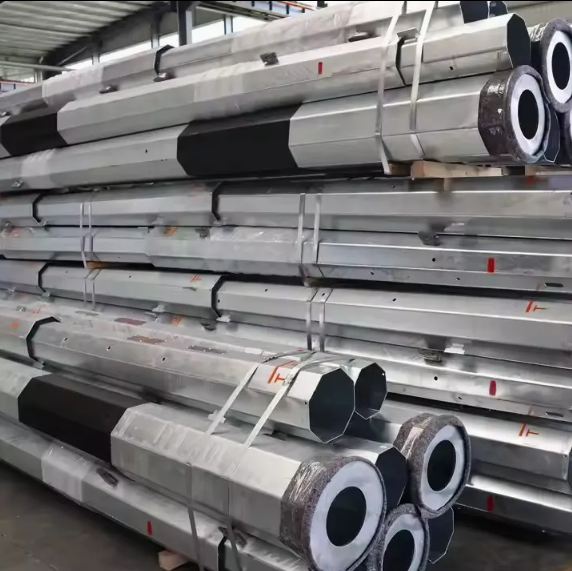
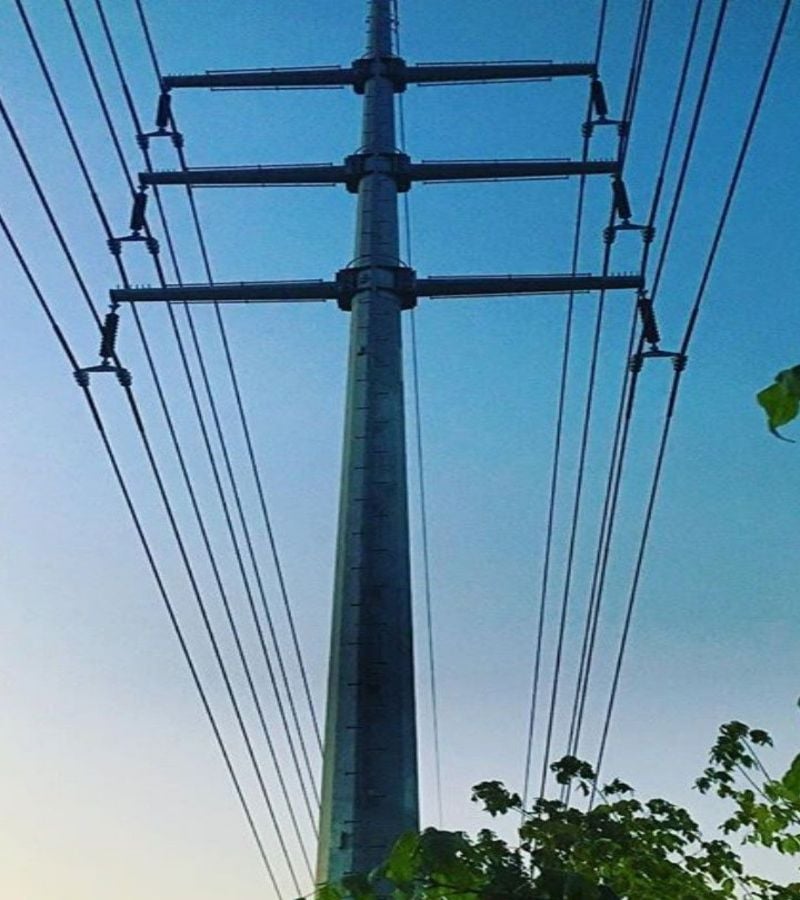
A power single-pole transmission tower generally uses a steel tube as its main tower body. It can be assembled through flange connections, slip-fit connections, or other engineered connection methods. Crossarms, overhead ground wire supports, and related accessories are designed according to the line voltage, conductor arrangement, load conditions, and site environment.
Compared with conventional angle-steel towers, single-pole transmission towers have a more concentrated main structure and a cleaner overall profile. Depending on the route, road conditions, surrounding buildings, available land, and environmental requirements, the tower height, pole diameter, crossarm configuration, foundation interface, and corrosion protection system can be customized.
A single-pole transmission tower is not the only solution for every transmission line project. The final design should be verified by a qualified engineering team based on the voltage level, conductor type, wind load, ice load, geological conditions, span length, safety clearances, and other project parameters. The key value of a single-pole tower is that it provides a more compact and adaptable structural solution for specific sites and transmission line requirements.
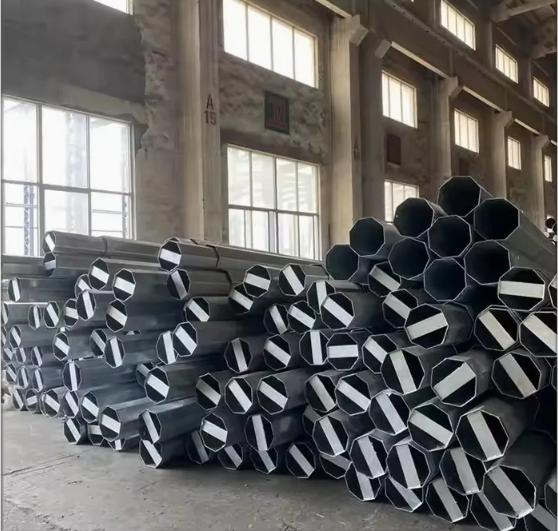
AI computing centers typically contain large numbers of high-performance servers, network devices, storage systems, and cooling equipment. As the facility grows, power demand and operational complexity also increase. Stable transmission lines and a well-planned power connection system are essential for continuous computing operations.
Computing projects are not always completed in a single construction phase. Facilities may be expanded according to business demand, data hall capacity, and investment schedules. As the number of servers increases, the park may need new substations, extended transmission lines, or optimized power corridors. Transmission towers and line systems should therefore be adaptable to future expansion where project conditions allow.
Data centers, intelligent computing centers, and technology parks are usually developed in areas with convenient access to transportation, communications, and energy. However, these locations often have limited land and restricted construction space. Transmission facilities must meet safety clearances and operational requirements while minimizing their impact on roads, buildings, park layouts, and the surrounding environment.
AI computing projects are often sensitive to construction schedules. The manufacturing, transportation, installation, and maintenance efficiency of transmission towers can influence the overall progress of the supporting power project. Therefore, a suitable product should offer not only structural performance, but also good engineering adaptability throughout design, fabrication, assembly, site installation, and maintenance.
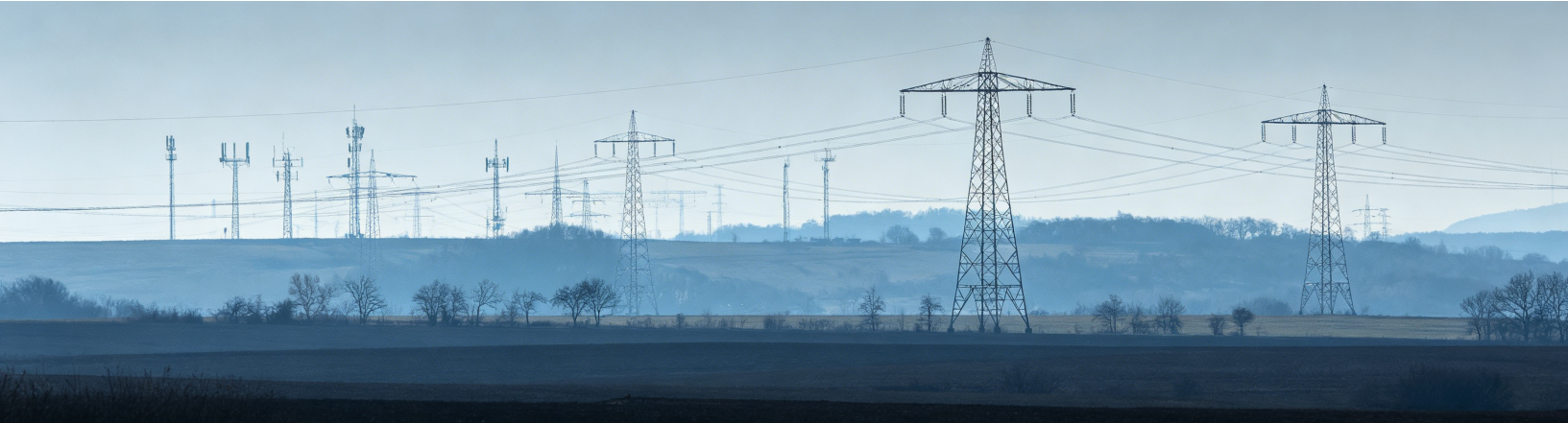
Data centers and intelligent computing centers need to receive stable power from substations or regional grids. Single-pole transmission towers can be used for external park transmission lines, substation incoming and outgoing lines, line angle sections, and designated power corridors.
For power connection projects, the towers can be arranged according to roads, buildings, walls, existing utility lines, and other site conditions. In areas with limited space or strict requirements for tower appearance, optimized tower body and crossarm designs can improve the adaptability of the transmission corridor.
Computing parks generally require substations, transmission lines, and backup power systems. Single-pole transmission towers can be used for overhead lines inside or around the park, supporting new power corridors, park expansion, and phased power supply construction.
For industrial park projects, appearance, land use, construction planning, and coordination with the surrounding environment are all important. With its clean structure, a single-pole tower can be suitable for locations where both engineering function and visual integration matter.
As urban digital infrastructure and large electricity-consuming projects grow, some areas require grid upgrades, line relocation, or additional power capacity. Compared with more space-intensive structures, single-pole transmission towers can provide a compact line support solution for roads, industrial parks, and public facilities when engineering conditions are suitable.
Urban upgrade projects must also consider existing lines, traffic organization, underground utilities, and nearby buildings. Single-pole towers can be designed and customized in sections according to site conditions, helping connect new facilities with existing power infrastructure.
Some AI computing projects are developed alongside wind power, solar power, hydropower, or other renewable energy projects. Transmission lines and related power facilities are required to connect the generation side with the load center.
Single-pole transmission towers can be used for renewable energy collector lines, outgoing transmission lines, and substation-related lines. Materials, corrosion protection, structural design, and foundation interfaces can be selected according to local wind loads, corrosive conditions, temperature differences, and terrain.
In addition to AI computing centers, smart manufacturing plants, communication facilities, rail transit projects, research bases, and large industrial parks also require reliable power. Single-pole transmission towers can form part of the park power system and support new lines, line extensions, and power relocation projects.
A single-pole transmission tower uses a steel tube as its primary load-bearing structure, giving it a relatively concentrated profile. In areas near roads, industrial parks, urban edges, or dense buildings, its compact structure can help optimize tower placement and reduce the use of surrounding space.
For AI computing parks that must accommodate data halls, substations, cooling facilities, roads, and communication systems at the same time, effective control of transmission tower footprints can improve overall land-use efficiency.
The simple lines of a single-pole tower create a more streamlined visual profile. For technology parks, data center campuses, and urban grid upgrade projects, this can help reduce the visual impact of power facilities on surrounding landscapes and building interfaces.
The final tower type, color, and corrosion protection coating should still be selected according to local planning, landscape, and safety requirements. Product selection should not be based on appearance alone.
AI computing-related power projects can have significantly different site conditions. Voltage level, conductor arrangement, tower height, line angle, span length, terrain, and weather conditions may all affect the transmission tower design.
A power single-pole transmission tower can be customized according to project parameters, including:
A customized design helps the product match the actual transmission line instead of relying on a standard configuration that may not fit the project.
Single-pole towers are commonly manufactured in sections and assembled on site. Proper section design can take into account vehicle access, road width, lifting equipment, and available construction space, helping reduce transportation and on-site storage pressure.
For computing projects with demanding schedules, fabrication accuracy, component identification, connection hardware, and assembly planning can all affect installation efficiency. Therefore, procurement should consider not only steel and welding quality, but also the supplier's complete delivery capability from detailed design through site installation support.
The clear structure and concentrated components of a single-pole tower can support routine inspection and maintenance. After commissioning, operators can establish inspection plans covering the tower body, flanges, crossarms, connection components, corrosion protection layer, foundation, and grounding system.
Convenient maintenance does not mean maintenance-free operation. Transmission towers should still be inspected periodically according to the requirements of the line operator and applicable technical standards.
AI computing businesses are characterized by continuous upgrades and capacity expansion. Supporting power facilities should consider future line adjustments, load growth, and campus expansion during the initial design stage. Where appropriate, single-pole transmission towers can provide design flexibility for future modifications through tower type reservations, optimized crossarm configurations, and coordinated transmission corridor planning.
Whether a specific tower can support future expansion must be assessed by the power design, structural engineering, and operations teams according to actual line conditions.
Different voltage levels require different insulation distances, conductor arrangements, and structural designs. Before procurement, confirm the line voltage, number of circuits, conductor type, ground wire configuration, and line type to support accurate engineering design.
Tower height and span length affect tower forces, foundation dimensions, and conductor sag. The project owner should provide the route alignment, tower elevation, crossing conditions, and local wind and ice load requirements. Selection should not be based only on appearance or a single dimensional parameter.
Transmission towers are normally exposed to outdoor conditions for long periods. Material quality and corrosion protection directly affect service life and maintenance cost. During procurement, confirm the steel standard, welding requirements, hot-dip galvanizing or other surface treatment, and quality inspection requirements for the corrosion protection layer.
For coastal, humid, high-salt-spray, industrial pollution, or high-temperature-difference environments, the corrosion protection system should be selected according to local exposure conditions.
Flange connections, slip-fit connections, and other connection methods each have suitable applications. The project should consider transportation dimensions, lifting equipment, road access, installation height, and maintenance requirements before selecting a connection method.
It is also important to confirm bolt grades, the quantity of connection components, installation tools, and site assembly requirements so that the design, production, and construction stages remain consistent.
A transmission tower cannot be considered separately from its foundation. The tower design must match the foundation type, anchor bolts, soil conditions, groundwater level, and uplift requirements.
Before production, a qualified engineering team should verify the tower and foundation interfaces together. This helps prevent issues such as mismatched connection dimensions or installation difficulties on site.
In addition to product price, evaluate whether the supplier can provide:
For power projects supporting AI computing, response speed, technical communication, and delivery reliability can be just as important as the tower itself.
From a project planning perspective, the role of a single-pole transmission tower is not limited to supporting conductors. It is also an important infrastructure link between the power source, transmission corridor, and computing load center. A complete power supply project for an AI computing facility generally needs to coordinate the following aspects:
Power connection:
1. Define the power source, connection point, and supply route for the computing center;
Route planning:
2. Determine the transmission corridor according to roads, buildings, park boundaries, and future expansion directions;
Tower design:
3. Select the appropriate tower type based on voltage level, conductor arrangement, load conditions, and tower location;
Construction planning:
4. Design tower sections and connection methods according to transportation, lifting, and site work conditions;
Operation and maintenance:
5. Establish periodic inspection procedures for towers, lines, foundations, and corrosion protection systems;
Expansion planning:
6. Consider future data hall expansion and changing power demand during the initial project stage.
Only by planning the transmission tower as part of the complete power system and computing park can its engineering value be fully realized.
The growth of AI computing depends on a stable power supply and transmission infrastructure that matches the specific project environment. With its compact structure, clean appearance, flexible design, convenient transportation and installation, and adaptability to various engineering scenarios, the power single-pole transmission tower can provide a practical tower option for data centers, intelligent computing centers, computing parks, urban grid upgrades, and renewable energy transmission projects.
For actual procurement and engineering applications, project owners should select a professional supplier based on voltage level, line loads, site environment, foundation conditions, and maintenance requirements. The supplier should ideally have capabilities in detailed design, manufacturing, corrosion protection, quality control, and project delivery.
For companies planning an AI computing center or power capacity expansion project, confirming line parameters, tower location conditions, and delivery requirements at an early stage can improve solution compatibility, reduce rework risks, and provide stronger power support for the stable and scalable operation of computing infrastructure.
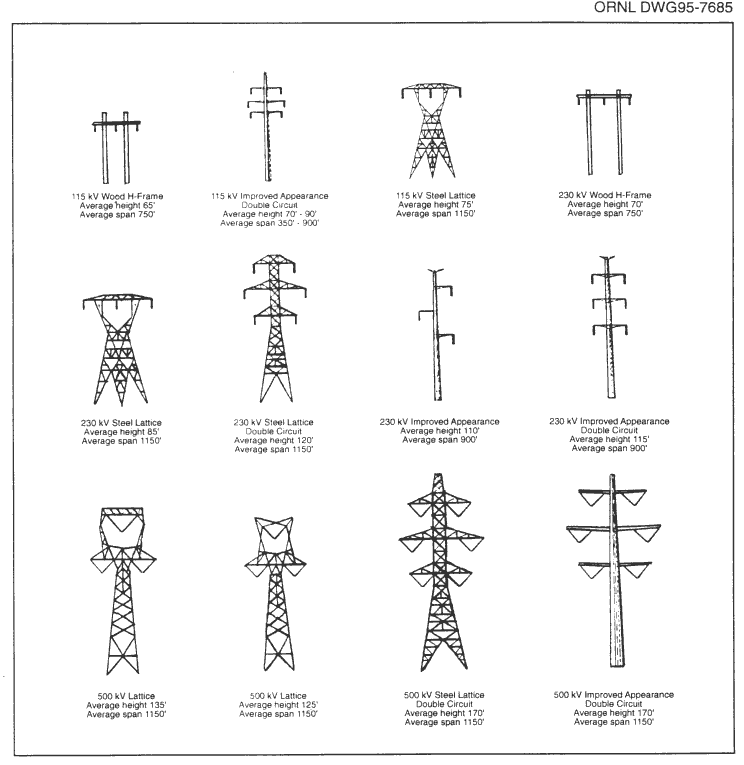
If you are developing a data center, intelligent computing center, computing park, or related power project, prepare the following information for an initial technical evaluation:
Based on this information, a qualified supplier can provide tower recommendations, a technical proposal, a quotation, and a delivery plan.
 Hot News
2026-08-25
2026-07-27
2026-07-21
2026-07-14
2026-07-08
2025-10-27

With 45 years of family-run manufacturing experience, Hebei Junhao.Communication Technology Co., Ltd specializes in manufacturing high-quality communication and power towers. Our state-of-the-art 60.000 square meter facility boasts an annual production capacity of 150.000 metric tons, ensuring reliability and scalability for projects of any size, we have established long-standing partnerships with leading
Guangchuan Town, Jing County, Hengshui City, Hebei Province, China
Copyright © 2026 Hebei Junhao Communication Technology Service Co., Ltd. All rights reserved Privacy Policy
 EN
EN