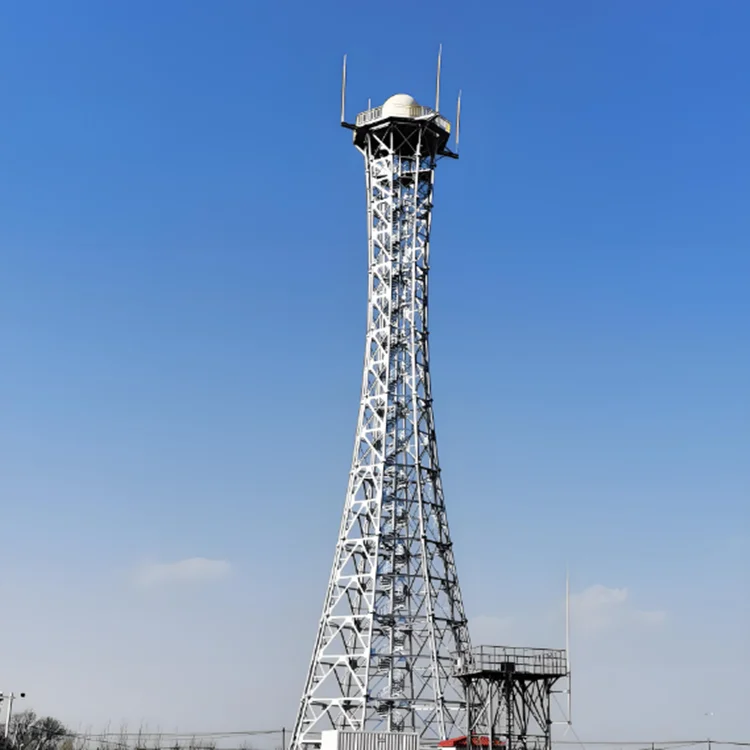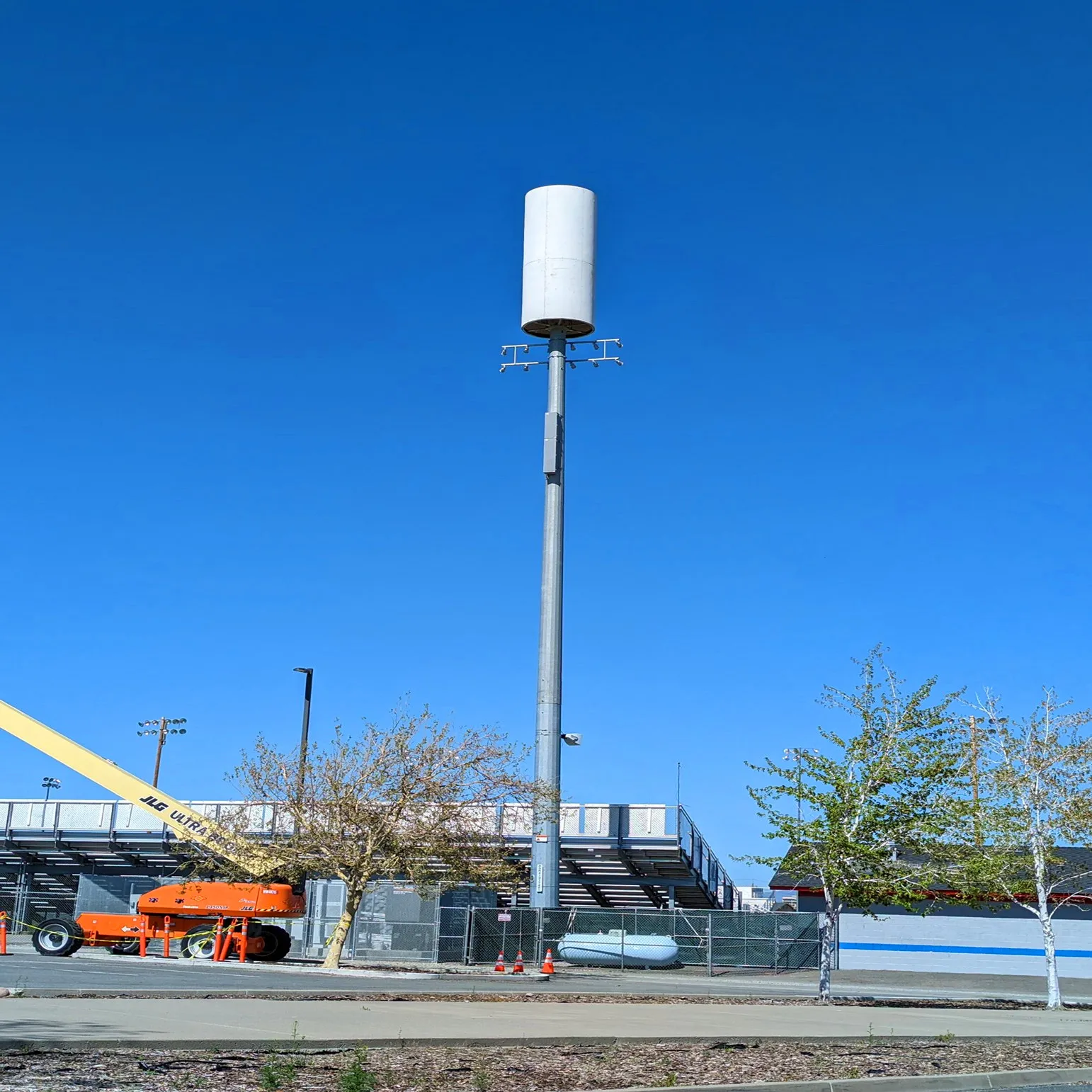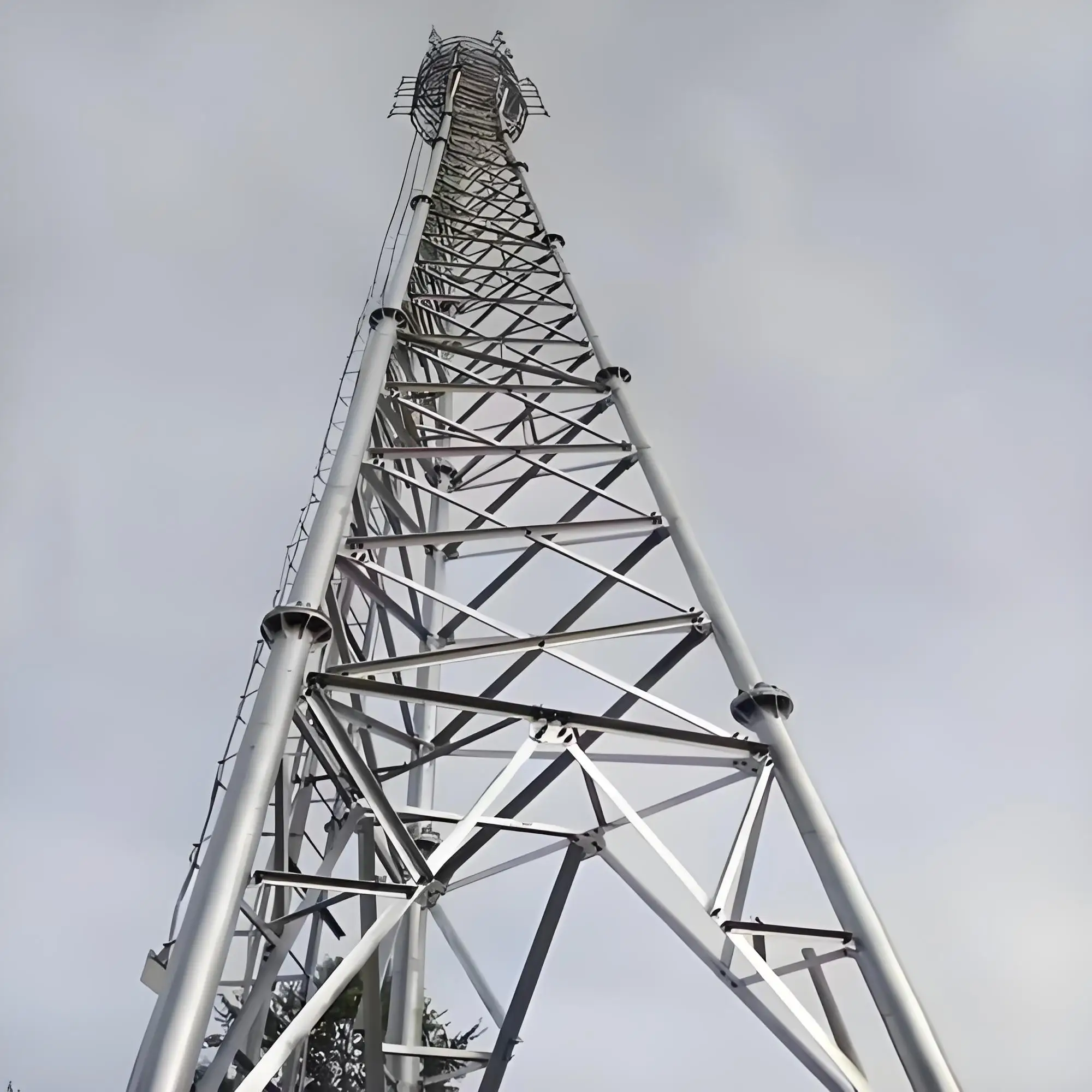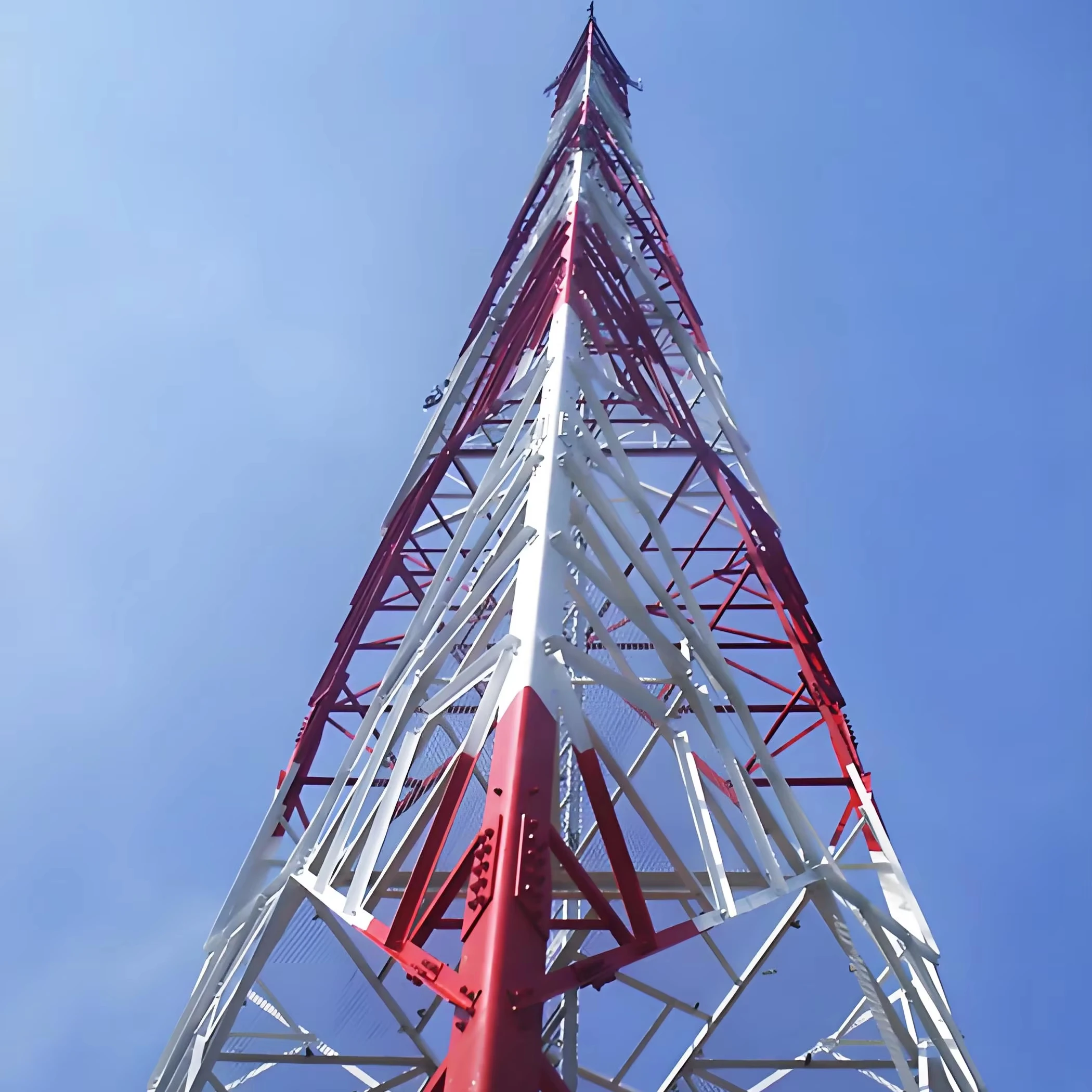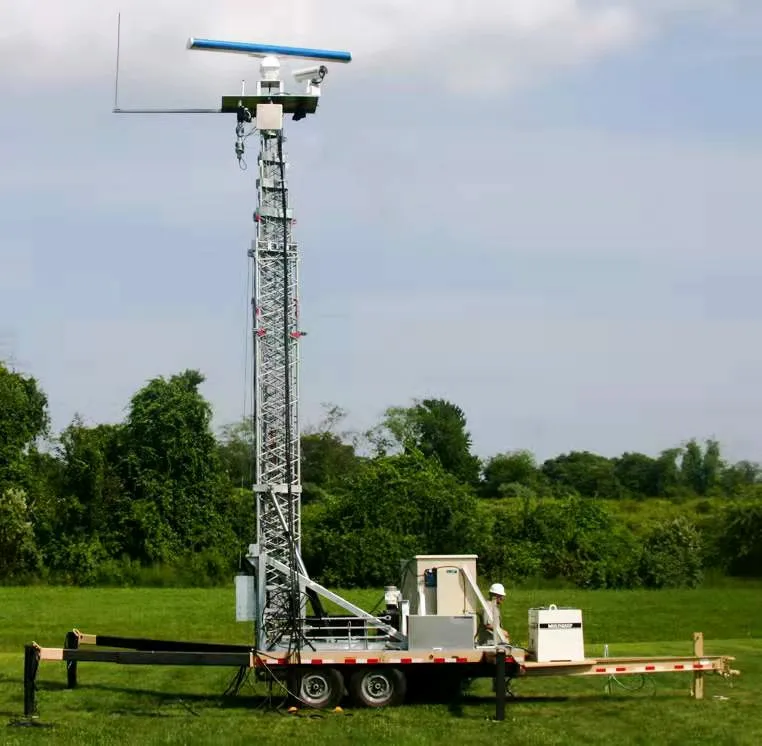
Mobile trailer lifting tower deployed for temporary elevated operations.
Many field operations need equipment to work from an elevated position, but do not require a permanent tower. Communication antennas, monitoring cameras, lighting systems and other devices may need to be moved between worksites, events or response areas.
A mobile trailer lifting tower provides a practical solution for these changing conditions. The tower can be transported to the required location, positioned on a suitable surface, stabilized and raised when the operation begins. When the task is complete, it can be lowered, secured and moved to the next site.
This combination of height and mobility makes the system suitable for temporary projects, outdoor operations and locations where building permanent infrastructure would be time-consuming or impractical.
A mobile trailer lifting tower is an elevated support system mounted on a towable trailer platform. It normally combines a lifting structure, trailer chassis, support legs or outriggers, stabilization components and a mounting position for the required equipment.
Depending on the project, the upper section may be used for antennas, cameras, lights, sensors or other field equipment. The lifting structure may be designed to fold or lower for transport, helping the complete system move between operating locations.
The trailer is not only a transport base. It is part of the deployment system. Its layout, support arrangement and equipment interface all affect how efficiently the tower can be positioned and operated in the field.
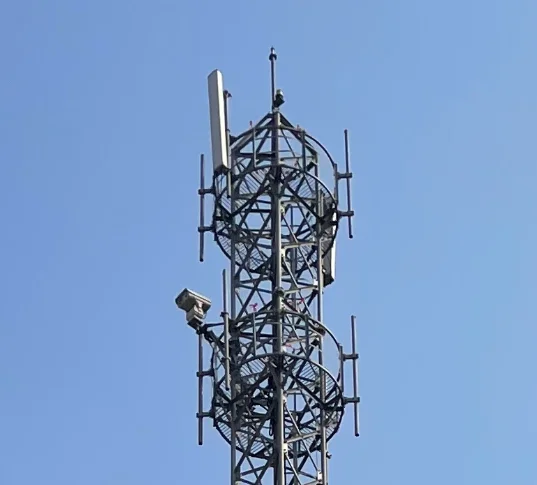
Elevated antennas can help create temporary communication links, field networks and event connectivity. A raised position can also be useful when communication equipment must be deployed in an open area or at a temporary project location.
The tower configuration should be selected according to the equipment package, required operating height, cable routing and site conditions.
A camera or sensor mounted at an elevated position can provide a wider view of a site. This makes mobile lifting towers suitable for temporary security, perimeter observation, traffic monitoring, construction-site management and outdoor events.
Because the system can be relocated, one tower may support several work areas during different stages of a project.
Outdoor worksites, temporary facilities and emergency areas may need lighting that can be moved as the work progresses. A trailer-mounted lifting tower can support lighting equipment above the working area and can be positioned where illumination is needed.
The final setup should consider the lighting load, power source, operating environment and required coverage.
During emergency response or temporary recovery work, fixed infrastructure may not be available. A mobile trailer lifting tower can bring elevated communication, monitoring or lighting equipment to the response area without waiting for a permanent installation.
Its value comes from the ability to transport the system, deploy it in a prepared location and relocate it as field conditions change.
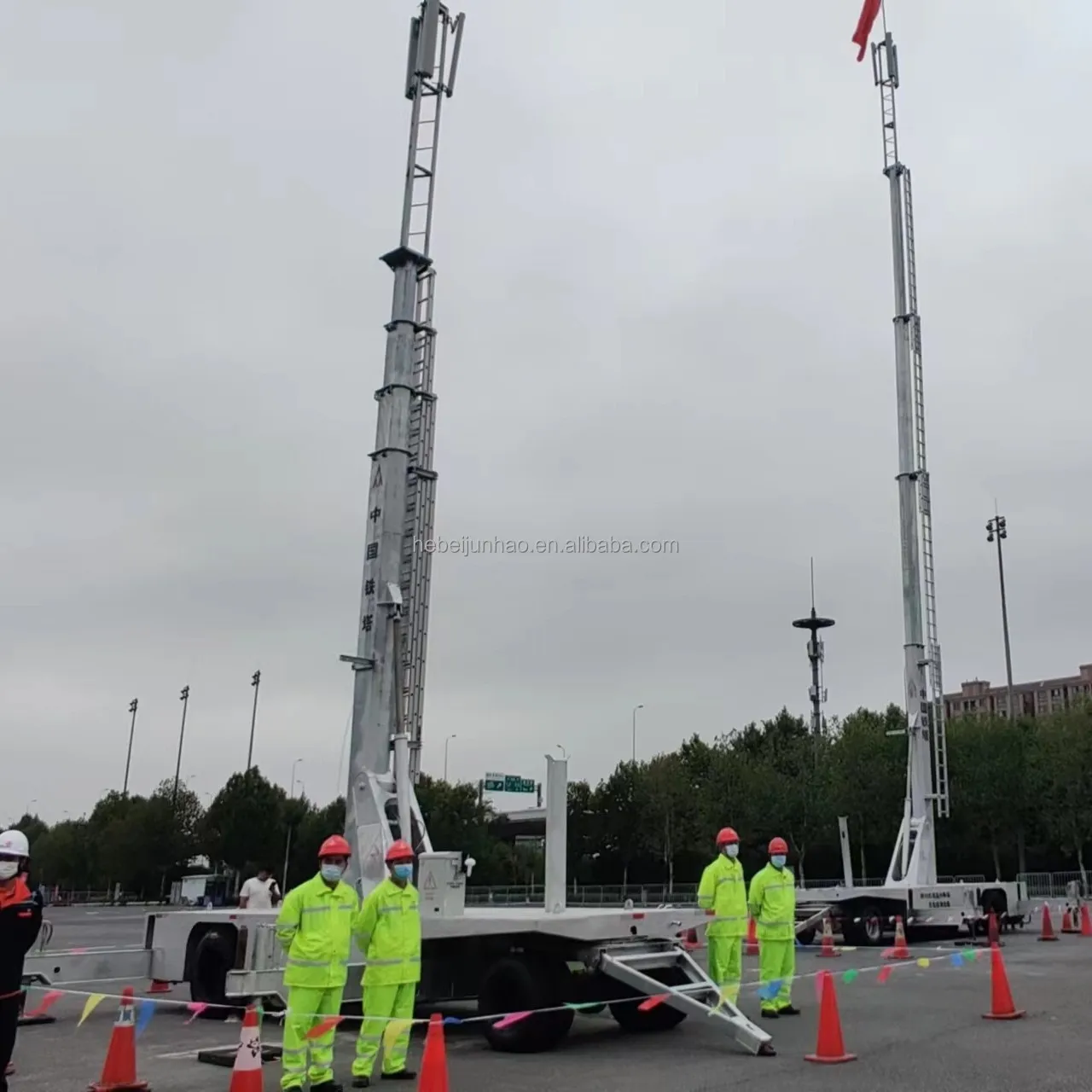
Mobile towers can support temporary coverage across controlled outdoor work areas.
A reliable deployment process begins before the trailer reaches the worksite. The route, access conditions, working area and equipment package should be reviewed in advance.
Check the access road, entrance width, turning area and final positioning space. The towing vehicle and trailer arrangement should be suitable for the route and the destination.
Place the trailer on a suitable surface with enough room for support legs, operator access and safe working clearance. Avoid areas with overhead obstacles or unsuitable ground conditions.
Deploy the specified support legs, outriggers or anchoring components before raising the tower. Stability is a critical part of safe operation and should be assessed according to the actual site conditions.
Follow the approved operating sequence for lifting, locking, cable management and equipment connection. The operator should confirm that the payload and related components are properly secured.
When the operation is complete, lower the tower according to the approved procedure, inspect the system, secure the equipment and prepare the trailer for transportation.
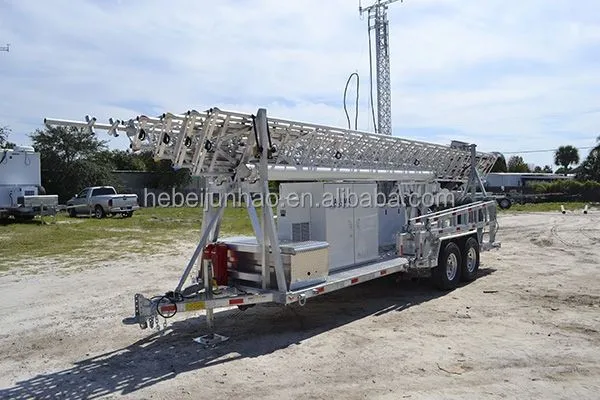
Folded configuration helps prepare the tower for road transport and relocation.
A permanent tower may be the right choice for a long-term installation, but temporary projects often require a different approach. A mobile trailer lifting tower can reduce the need for repeated construction work and may allow the same equipment platform to serve multiple locations.
Mobility can be particularly valuable when:
The most effective solution is not necessarily the tallest tower. It is the configuration that provides the required operating position while remaining practical to transport, stabilize and operate.
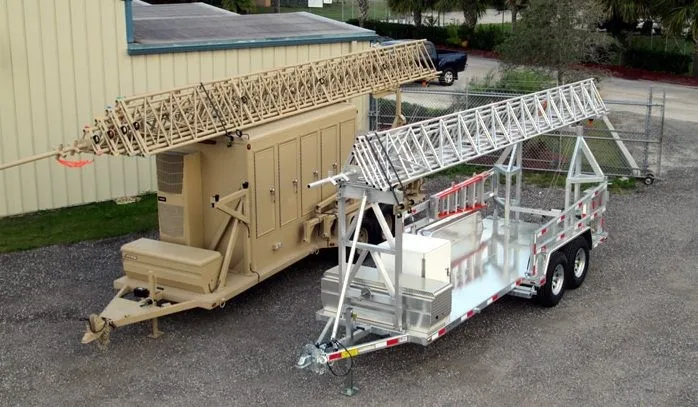
Different trailer-mounted configurations can be arranged for different equipment and operating requirements.
A project should be defined by its operating requirements rather than by height alone. The following points help create a more complete specification.
Identify every item that will be mounted on the tower, including antennas, cameras, lights, brackets, cables and accessories. The total payload and exposed area influence the required configuration.
Define the height needed for the actual objective. Communication coverage, camera visibility and lighting coverage may require different operating positions.
Review the surface, available footprint, wind exposure, overhead clearance and anchoring method. These factors should be considered before the tower is transported to the site.
Confirm the towing arrangement, storage conditions, road access and relocation frequency. A mobile tower should be practical not only during operation but also before and after deployment.
Consider the power supply, cable routing, routine inspection, spare parts and operator training required for the complete system.
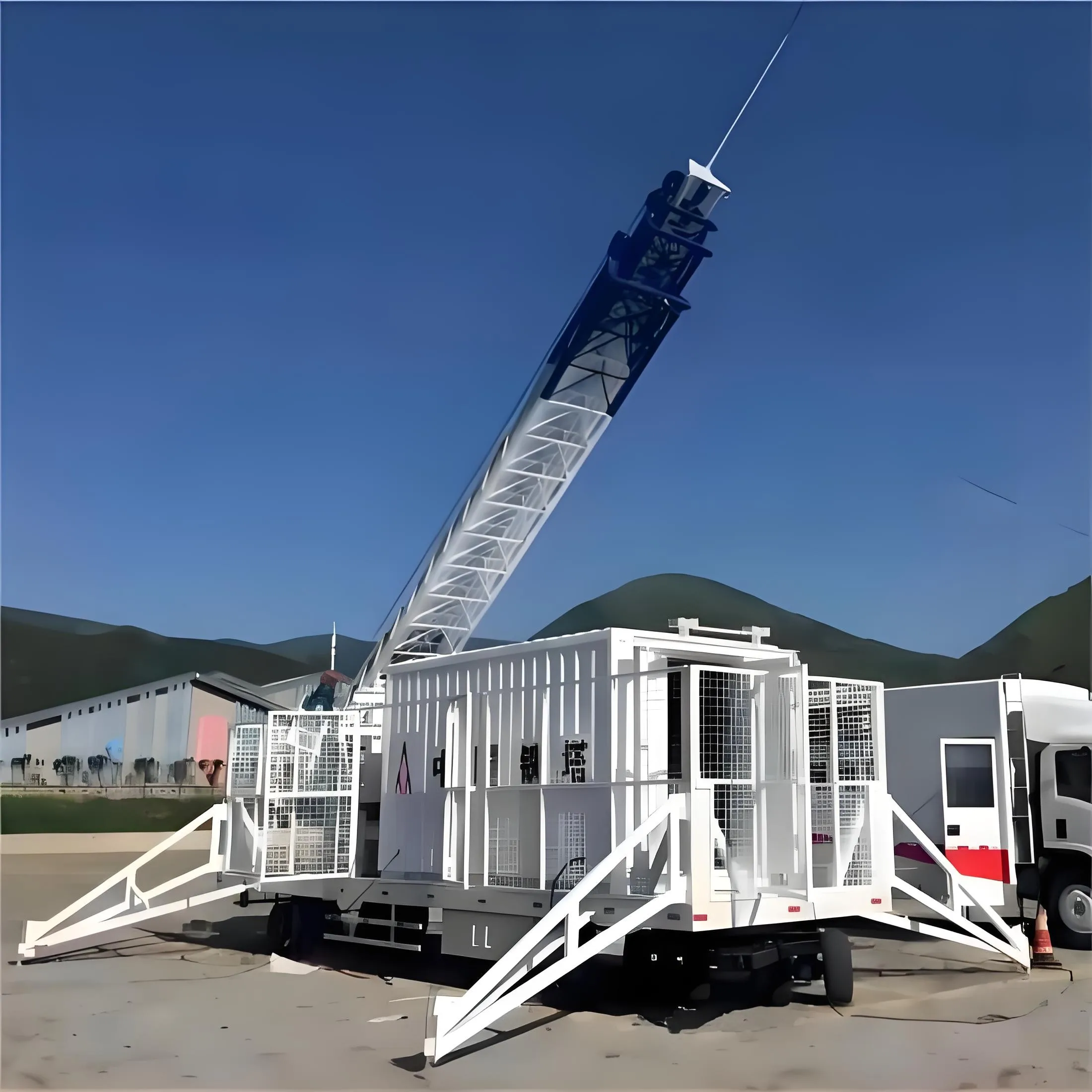
The trailer platform, lifting structure and support system work together as one mobile infrastructure solution.
Mobile trailer lifting towers help bring elevated equipment to locations where temporary height, flexible transport and fast repositioning are important. They can support communication, surveillance, lighting and emergency-response applications while avoiding the limitations of a fixed installation.
The best configuration starts with a clear understanding of the project: what equipment must be raised, how high it needs to operate, where it will be deployed and how often it will be moved.
When these requirements are defined together, the trailer, lifting structure, stabilization system and equipment interface can be planned as one complete solution for reliable field use.
 Hot News
2026-08-25
2026-07-27
2026-07-21
2026-07-14
2026-07-08
2025-10-27

With 45 years of family-run manufacturing experience, Hebei Junhao.Communication Technology Co., Ltd specializes in manufacturing high-quality communication and power towers. Our state-of-the-art 60.000 square meter facility boasts an annual production capacity of 150.000 metric tons, ensuring reliability and scalability for projects of any size, we have established long-standing partnerships with leading
Guangchuan Town, Jing County, Hengshui City, Hebei Province, China
Copyright © 2026 Hebei Junhao Communication Technology Service Co., Ltd. All rights reserved Privacy Policy
 EN
EN