 EN
EN


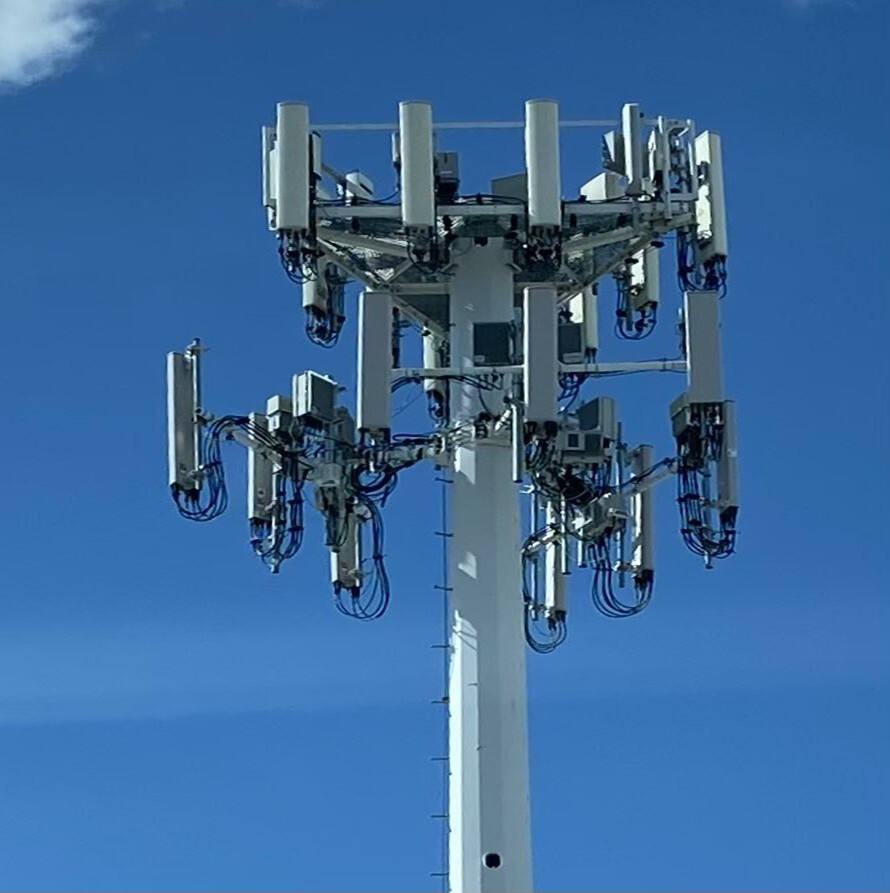
Lattice towers form the structural backbone of modern telecommunications infrastructure, supporting heavy antenna arrays, transmission equipment, and other critical components while withstanding extreme environmental forces. The structural integrity of these towers depends heavily on how loads are transferred from applied forces through the framework to the foundation. Among all design elements, the bracing pattern emerges as the single most critical factor governing load distribution efficiency, determining whether forces flow predictably through the structure or concentrate dangerously at weak points. Understanding why the bracing pattern plays this pivotal role requires examining the fundamental mechanics of lattice tower behavior under diverse loading conditions, the geometric relationships between bracing members and primary chords, and the engineering principles that make certain configurations superior for specific applications and environmental contexts.
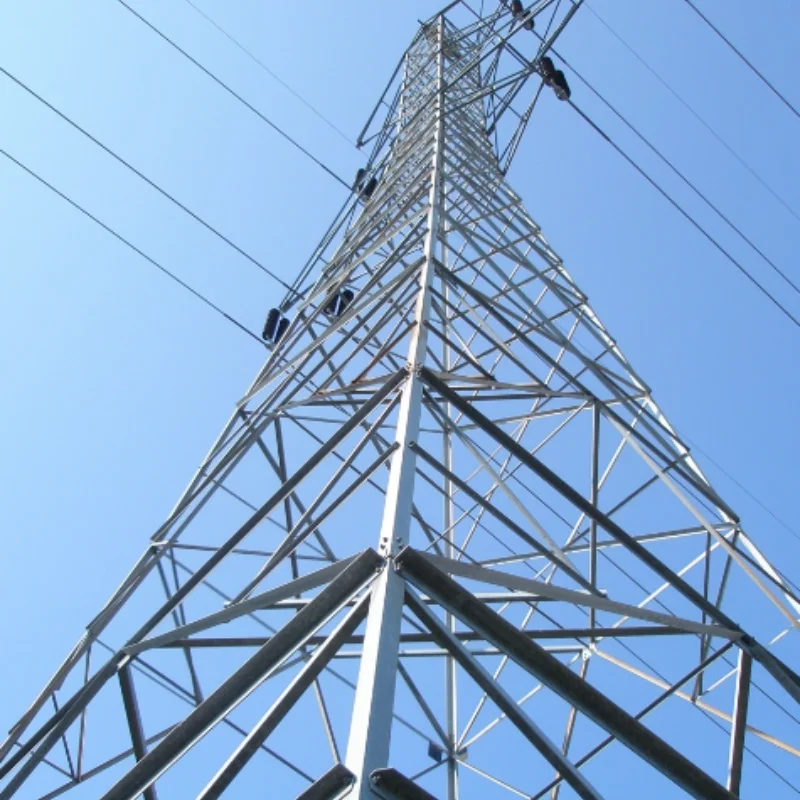
The bracing pattern directly influences how a lattice tower responds to axial compression, lateral wind forces, torsional moments, and combined loading scenarios that occur during typical service life. When properly engineered, the bracing pattern creates multiple load paths that distribute applied forces across numerous structural members, preventing overload of individual components and ensuring redundancy that enhances overall safety margins. Conversely, poorly conceived bracing patterns create stress concentrations, introduce secondary bending moments in members designed primarily for axial loads, and reduce the tower's capacity to resist the dynamic forces generated by wind gusts, ice accumulation, and seismic events. This article explores the mechanical reasons why bracing pattern selection fundamentally determines lattice tower performance, examining the interaction between geometric configuration and structural behavior while providing practical insights for engineers responsible for tower design, evaluation, and modification decisions.
Fundamental Mechanics of Load Transfer in Lattice Tower Structures
Primary Load Paths and the Role of Triangulation
Lattice towers function as three-dimensional truss systems where structural members experience primarily axial forces rather than bending moments. This efficiency derives from triangulation, the geometric principle that triangular configurations remain stable under load while other polygonal shapes deform unless properly braced. The bracing pattern creates these triangular cells throughout the tower structure, establishing the framework through which applied loads transfer from point of application to the foundation. When antenna loads, wind forces, or other external actions are applied to the tower, these forces decompose into components that travel through the bracing pattern as tension and compression forces in individual members. The effectiveness of this load transfer depends entirely on whether the bracing pattern provides direct, continuous paths that align with the force directions experienced during service conditions.
The geometric arrangement of bracing members determines which load paths are stiff and efficient versus those that are flexible and prone to secondary effects. In a well-designed bracing pattern, the primary load paths align closely with the directions of dominant forces, minimizing the angular deviation that forces must traverse through the structure. This alignment reduces the magnitude of forces in individual members, distributes loads more evenly across the cross-section, and limits deflections that could lead to serviceability issues or progressive collapse scenarios. The bracing pattern also establishes the effective buckling length of compression members, a critical parameter that determines their capacity to resist axial loads without premature failure. By creating intermediate bracing points, the pattern subdivides longer members into shorter segments with higher critical buckling loads, substantially increasing the tower's overall load-carrying capacity without adding significant material weight.
Distribution of Vertical and Lateral Forces Through Bracing Systems
Vertical loads from antenna equipment, platforms, and the tower's self-weight transfer primarily through the corner legs or main chords of the lattice structure. However, the bracing pattern plays an essential role even in this seemingly straightforward load case by preventing buckling of these compression members and ensuring that load distribution among multiple legs remains balanced. When one leg experiences slightly higher load due to construction tolerances, foundation settlement, or asymmetric antenna placement, the bracing pattern redistributes excess load to adjacent legs through shear forces in the bracing members. This load-sharing mechanism prevents overload of individual legs and maintains structural integrity even when initial conditions deviate from design assumptions. The stiffness and configuration of the bracing pattern directly determine how effectively this redistribution occurs and how quickly localized overstress dissipates throughout the structure.
Lateral forces from wind pressure represent the dominant design case for most telecommunication towers, and the bracing pattern becomes absolutely critical for managing these loads. Wind pressure acts on the tower's projected area, creating both overall overturning moments and localized pressures on individual faces. The bracing pattern must transfer these lateral forces from the windward face to the leeward face, converting distributed pressure into discrete member forces that ultimately resolve into foundation reactions. The geometric configuration of the bracing pattern determines the efficiency of this load transfer mechanism, with some patterns creating direct diagonal paths that align with resultant wind forces while others require forces to traverse multiple members in sequence, increasing member forces and deflections. Additionally, the bracing pattern resists torsional moments that arise from eccentric loading or wind approaching at oblique angles, providing the torsional stiffness necessary to prevent excessive twist that could damage mounted equipment or compromise structural stability.
Bracing Pattern Configurations and Their Structural Implications
Single Diagonal Versus Double Diagonal Bracing Arrangements
The most fundamental distinction in bracing pattern design separates single diagonal systems from double diagonal or cross-braced configurations. Single diagonal bracing employs one diagonal member per panel face, creating a triangulated pattern with minimal material investment. This configuration efficiently resists lateral loads in one direction, with the diagonal member working in tension when forces push against it and theoretically working in compression when forces reverse direction. However, slender diagonal members often cannot develop significant compression capacity before buckling, making single diagonal systems effectively one-way bracing that only resists lateral loads efficiently in the direction where the diagonal works in tension. This limitation requires careful consideration of load reversal scenarios and may necessitate double diagonal patterns where bidirectional resistance is critical for structural performance and safety.
Double diagonal or cross-bracing patterns incorporate two diagonal members per panel, crossing each other to form an X-shaped configuration within each rectangular panel. This arrangement ensures that regardless of lateral load direction, one diagonal always works in tension and contributes to lateral resistance, while the compression diagonal may buckle but contributes minimal negative effects. The bracing pattern redundancy provides bidirectional load resistance, improves torsional stiffness, and creates additional load paths that enhance overall structural robustness. However, double diagonal patterns require more material, create more connection points that must be detailed and fabricated, and introduce intersection points where diagonals cross that require careful detailing to avoid interference and ensure both members can develop their full capacity. The choice between single and double diagonal configurations fundamentally shapes the tower's load distribution characteristics and must align with anticipated loading conditions, safety factors, and economic constraints governing the project.
K-Bracing, V-Bracing, and Chevron Patterns in Tower Applications
Beyond simple diagonal arrangements, several specialized bracing patterns have evolved for lattice tower applications, each offering distinct advantages for load distribution under specific conditions. K-bracing patterns feature two diagonal members that meet at a central point on a horizontal or vertical member, forming a K shape when viewed in elevation. This bracing pattern reduces the unsupported length of the vertical chord members, effectively increasing their buckling capacity and allowing longer panel heights without requiring larger chord sections. The K-bracing configuration creates efficient load paths for both vertical and lateral forces, distributing loads more uniformly across the tower cross-section while minimizing the total length of bracing members required. However, the central connection point where multiple members converge requires careful detailing to ensure adequate connection capacity and avoid stress concentrations that could initiate fatigue cracks under cyclic loading.
V-bracing and chevron patterns position two diagonal members that either converge upward in a V configuration or diverge downward in an inverted chevron arrangement. These bracing patterns offer aesthetic appeal and can reduce visual obstruction compared to full X-bracing, making them attractive for towers in sensitive locations where visual impact matters. From a structural perspective, V-bracing patterns provide intermediate lateral support to vertical chord members while creating relatively direct load paths for lateral forces. The effectiveness of these configurations depends critically on whether the apex connection is properly designed to transfer forces between the converging diagonals and whether the pattern creates favorable angles that minimize member forces. In some loading scenarios, V-bracing can concentrate forces at the apex connection, requiring robust connection details that add complexity and cost. The selection of K, V, or chevron bracing patterns must consider not only load distribution efficiency but also fabrication complexity, connection detailing requirements, and the specific force distributions anticipated during the tower's service life.
Warren and Pratt Truss Adaptations for Lattice Towers
Lattice towers often adapt classical truss patterns originally developed for bridge engineering, particularly Warren and Pratt truss configurations that have proven track records for efficient load distribution. Warren truss patterns feature alternating diagonal members that slope in opposite directions in successive panels, creating a zigzag pattern without vertical web members between the top and bottom chords. When applied to lattice tower bracing, this pattern creates a regular, repetitive geometry that simplifies fabrication and ensures consistent load distribution characteristics throughout the tower height. The Warren bracing pattern efficiently resists both vertical and lateral loads, with diagonal members experiencing relatively uniform forces that facilitate member sizing and connection design. The alternating slope of diagonals ensures that for most loading conditions, roughly half the members work in tension and half in compression, providing balanced structural behavior that prevents concentrated stress patterns.
Pratt truss patterns position diagonal members so they slope toward the center of the structure under typical loading, placing diagonals in tension and verticals in compression for the most common load cases. This configuration optimizes material distribution because tension members can be made lighter than compression members of equivalent capacity, since they are not susceptible to buckling. In lattice tower applications, Pratt-style bracing patterns work effectively when the dominant loading produces forces that align with the design assumptions inherent in the pattern. However, load reversal from wind direction changes or seismic forces can place the diagonals in compression and verticals in tension, potentially reducing the efficiency advantages the pattern offers. The bracing pattern selection between Warren, Pratt, or hybrid configurations must consider the full spectrum of loading conditions the tower will experience, ensuring that the chosen pattern provides adequate capacity and favorable load distribution characteristics for all credible scenarios rather than optimizing only for the most frequent load case.
Engineering Factors That Make Bracing Pattern Selection Critical
Member Force Magnitudes and Distribution Uniformity
The bracing pattern directly determines the magnitude of forces that develop in individual structural members under applied loads. For a given external load, different bracing patterns decompose the load into member forces of varying magnitudes depending on the geometric relationships between load direction and member orientation. A bracing pattern that aligns diagonals closely with the resultant force direction produces lower member forces because the load transfers more directly through fewer members. Conversely, a pattern with unfavorable geometry requires forces to traverse multiple members in sequence, amplifying the total force that must be carried by the structural system. This amplification effect can be substantial, with inefficient bracing patterns potentially doubling or tripling member forces compared to optimized configurations, requiring larger member sections that increase material costs and structural weight.
Beyond absolute force magnitudes, the uniformity of force distribution across multiple members significantly influences structural performance and safety. An ideal bracing pattern distributes applied loads among many members working at similar stress levels, maximizing utilization of material throughout the structure and providing redundancy that prevents localized failure from cascading. Poorly conceived patterns concentrate forces in a few critical members while leaving others lightly loaded, creating unbalanced structures where a single member failure could compromise overall stability. The bracing pattern also affects how fabrication tolerances, connection slippage, and material variability influence actual force distributions during service. Patterns that provide multiple parallel load paths tolerate these real-world imperfections better than statically determinate configurations where each member force is uniquely determined by equilibrium alone. The distribution uniformity achieved by the bracing pattern thus determines not only theoretical capacity but also the practical robustness and reliability of the tower structure under actual operating conditions.
Buckling Resistance and Effective Length Considerations
Compression members in lattice towers must be designed to resist buckling, a stability failure mode where slender members deflect laterally and lose load-carrying capacity well before the material reaches its yield strength. The capacity of a compression member depends critically on its effective length, the distance between points of lateral support that prevents sideways deflection. The bracing pattern establishes these support points, subdividing long members into shorter segments with correspondingly higher buckling capacities. A well-designed bracing pattern positions intermediate bracing points at optimal spacing that maximizes buckling resistance without requiring excessive numbers of members that add weight and fabrication complexity. The geometric configuration of bracing members relative to the compression chords they support determines the effectiveness of this lateral support and whether the bracing pattern truly prevents buckling or merely provides nominal restraint.
The bracing pattern must provide lateral support in multiple directions to control buckling effectively, since compression members can potentially buckle in any direction perpendicular to their longitudinal axis. Three-dimensional lattice towers require bracing patterns on multiple faces that work together to constrain deflection in all lateral directions while also preventing torsional buckling modes where members twist rather than deflect laterally. The coordination between bracing patterns on different tower faces becomes critical, as misaligned or poorly coordinated patterns can create buckling modes that exploit the weakest plane of lateral support. Additionally, the bracing pattern influences buckling through its effect on connection rigidity and the degree to which end conditions approach fixed, pinned, or partially restrained behavior. Connection details that provide significant rotational restraint reduce effective lengths and increase buckling capacity, but only if the bracing pattern creates a structural framework stiff enough to provide meaningful fixity rather than allowing connection zones to rotate freely under load.
Redundancy, Load Path Diversity, and Progressive Collapse Resistance
Structural redundancy represents a fundamental safety principle where multiple load paths exist so that failure of a single member does not cause total collapse. The bracing pattern determines the degree of redundancy inherent in the lattice tower structure, establishing whether alternative load paths exist and how effectively the structure redistributes loads when local damage occurs. Highly redundant bracing patterns incorporate multiple interconnected load paths that allow forces to bypass damaged or overloaded members, maintaining overall stability even when individual components fail. This redundancy provides crucial safety margins for structures supporting critical telecommunications infrastructure that must remain operational during extreme events and provides resilience against unforeseen loading conditions, material defects, or construction errors that might compromise individual members.
Progressive collapse scenarios where initial local failure triggers sequential failure of adjacent members represent a significant concern for lattice towers, particularly tall structures where collapse consequences are severe. The bracing pattern's configuration determines whether the structure possesses sufficient alternative load paths to arrest progressive collapse or whether the loss of key members initiates a zipper effect that propagates through the structure. Bracing patterns that create regular, interconnected triangulation throughout the structure generally provide better progressive collapse resistance than patterns with long unbraced segments or critical members whose failure immediately compromises large portions of the structure. The geometric regularity of the bracing pattern also influences how effectively engineers can identify critical members during design and implement appropriate safety factors or damage-tolerant details. Irregular or complex patterns may contain hidden failure mechanisms that are not apparent from standard analysis procedures, while regular, well-understood patterns allow more confident assessment of structural behavior under both normal and damaged conditions.
Practical Design Considerations for Bracing Pattern Selection
Wind Load Characteristics and Directional Effects
Wind loading dominates the lateral force demands on most telecommunication towers, and the bracing pattern must be tailored to the specific wind exposure conditions at the tower site. Wind forces act as distributed pressures on the tower's projected area, creating lateral forces that vary with height according to the vertical wind speed profile and the changing tower cross-section. The bracing pattern must efficiently collect these distributed loads and transfer them through the structure to the foundation, a task that becomes more challenging as tower height increases and wind forces grow larger. Different bracing patterns exhibit varying effectiveness depending on whether wind approaches perpendicular to a tower face, at oblique angles, or from constantly changing directions as occurs during turbulent conditions. A bracing pattern optimized for wind perpendicular to one face may perform less efficiently when wind approaches at 45-degree angles, potentially requiring double diagonal or other redundant patterns to ensure adequate capacity for all wind directions.
Dynamic wind effects including gusting, vortex shedding, and resonance phenomena introduce time-varying forces that stress the structure cyclically, potentially leading to fatigue damage in members and connections. The bracing pattern influences the tower's natural frequencies and mode shapes, determining whether wind-induced vibrations excite resonant responses that amplify structural deflections and member forces. Bracing patterns that provide high lateral stiffness generally shift natural frequencies upward, reducing the likelihood that wind gusts at typical frequencies will match structural resonances. However, overly stiff patterns may create brittle behavior that concentrates stresses rather than allowing some flexibility that helps absorb dynamic energy. The optimal bracing pattern balances stiffness sufficient to control deflections and prevent resonance with enough flexibility to accommodate dynamic effects without generating excessive member forces or connection demands. Site-specific wind climate data including turbulence characteristics, gust factors, and directional distributions should inform bracing pattern selection to ensure the chosen configuration provides adequate performance for the actual wind conditions the tower will experience.
Ice Loading, Combined Load Cases, and Environmental Factors
In cold climate regions, ice accumulation on tower members and antenna arrays creates substantial additional loads that the bracing pattern must accommodate. Ice forms on structural members asymmetrically depending on wind direction during freezing precipitation events, creating eccentric loads that generate torsional moments and unbalanced force distributions. The bracing pattern must provide torsional stiffness sufficient to resist these moments without excessive twist while also distributing the increased vertical loads from ice weight across the tower structure. Ice accumulation dramatically increases the projected area of members and antennas, amplifying wind forces that occur during or after icing events when frozen precipitation remains attached to the structure. This combined ice and wind loading often governs member sizing for towers in regions with significant icing potential, making the bracing pattern's effectiveness under these conditions absolutely critical for structural safety.
The bracing pattern must efficiently handle combined load cases where multiple environmental factors act simultaneously with varying orientations and magnitudes. Vertical loads from equipment and ice combine with lateral wind forces from various directions, creating complex three-dimensional stress states in individual members. Some members may experience simultaneous axial force, bending moment, and shear force, requiring the bracing pattern to minimize these combined effects through favorable geometric configuration. Temperature effects cause differential expansion between members exposed to different thermal environments, generating internal forces that the bracing pattern must accommodate without excessive stress. Seismic loading in earthquake-prone regions introduces lateral forces with different characteristics than wind loads, typically acting as inertial forces distributed according to structural mass rather than projected area. The bracing pattern must provide adequate capacity and favorable load distribution for all these environmental factors, not just the single dominant case, ensuring the tower remains safe throughout the full range of conditions it may experience during its design life.
Fabrication, Erection, and Economic Optimization
While structural performance remains paramount, practical bracing pattern selection must also consider fabrication efficiency, erection procedures, and overall project economics. Complex bracing patterns with many different member lengths and connection angles increase fabrication costs through increased cutting, fitting, and welding labor. Patterns that repeat regular geometric modules allow fabricators to standardize processes, reduce errors, and achieve economies of scale that lower production costs. The number and type of connections required by different bracing patterns significantly impacts fabrication time and cost, since each connection requires drilling, bolting or welding, and quality control inspection. Bracing patterns that minimize connection count while maintaining structural efficiency provide economic advantages that can make projects more competitive without compromising performance. The designer must balance the theoretical structural advantages of complex optimized patterns against the practical cost increases they may entail, selecting configurations that provide adequate performance at reasonable cost.
Erection procedures and construction safety considerations also influence bracing pattern selection. Patterns that allow the tower to be assembled in modules on the ground and lifted into place as complete sections generally improve construction safety and efficiency compared to stick-by-stick erection at height. The bracing pattern must provide adequate stability for the partially erected structure during construction, a critical consideration often overlooked in design. Some patterns that work excellently for the completed structure may create unstable configurations during intermediate erection stages, requiring temporary bracing or special erection procedures that increase costs and risks. Access for climbing, working platforms, and equipment installation also depends on the bracing pattern, with some configurations providing more convenient access routes while others obstruct movement and complicate maintenance activities. The long-term operational costs associated with inspection, maintenance, and potential modification should inform bracing pattern selection, favoring configurations that facilitate safe access and simplify future work while delivering structural performance that minimizes maintenance needs through robust, durable design.
FAQ
What happens if the bracing pattern is inadequate for the applied loads?
An inadequate bracing pattern leads to excessive deflections, overstressed members, and potential progressive collapse. The structure may develop localized failures where concentrated forces exceed member capacities, and the lack of alternative load paths prevents force redistribution. Buckling of compression members becomes more likely as effective lengths increase, and connection failures may occur where forces concentrate. The tower may exhibit excessive sway during wind events, potentially damaging mounted equipment and causing serviceability failures even if total collapse does not occur. Long-term fatigue damage accumulates more rapidly when the bracing pattern creates stress concentrations or requires members to carry loads beyond design assumptions.
Can the bracing pattern be modified after tower construction to improve performance?
Bracing pattern modifications after construction are possible but challenging and require careful structural analysis to ensure the modified configuration improves rather than compromises performance. Adding supplemental bracing members can reduce effective lengths of compression members and create additional load paths, potentially increasing tower capacity for added antenna loads or higher wind speeds. However, introducing new members alters force distributions throughout the structure, potentially overloading existing members or connections not designed for the revised load paths. Modification work requires safe access to elevation, precise alignment of new members with existing structure, and connection details compatible with original construction. The cost and disruption of post-construction modifications often exceed the expense of implementing an optimal bracing pattern during initial design and construction.
How does the bracing pattern interact with foundation design requirements?
The bracing pattern determines the distribution and magnitude of reactions transferred to the tower foundation, directly influencing foundation design requirements. Patterns that distribute loads uniformly among multiple tower legs create relatively balanced foundation reactions that can be accommodated with simpler, less expensive foundation systems. Conversely, patterns that concentrate forces in specific load paths may create unbalanced reactions requiring foundation designs that resist uplift on some legs while supporting high compression on others. The torsional stiffness provided by the bracing pattern affects how overturning moments from lateral loads distribute to individual foundation elements, influencing the sizing of anchor bolts, base plates, and foundation elements. The foundation designer must understand the load transfer mechanisms established by the bracing pattern to ensure the foundation system properly supports the reactions generated by the structural analysis.
Are there standardized bracing patterns that work well for most telecommunication towers?
Several bracing patterns have emerged as industry standards for telecommunication towers based on decades of successful performance across diverse applications. Warren-type patterns with alternating diagonal members provide reliable, efficient load distribution for many tower heights and loading conditions, offering good balance between structural efficiency and fabrication simplicity. Double diagonal X-bracing patterns deliver robust bidirectional resistance and redundancy, making them popular for critical installations requiring high reliability. K-bracing configurations effectively reduce compression member effective lengths while maintaining relatively simple connection details. However, no single pattern works optimally for all situations, and tower-specific factors including height, antenna loading, wind exposure, and site conditions should guide pattern selection. Experienced tower engineers often adapt standard patterns to specific project requirements rather than applying generic configurations without site-specific analysis and optimization.
Table of Contents
- Fundamental Mechanics of Load Transfer in Lattice Tower Structures
- Bracing Pattern Configurations and Their Structural Implications
- Engineering Factors That Make Bracing Pattern Selection Critical
- Practical Design Considerations for Bracing Pattern Selection
-
FAQ
- What happens if the bracing pattern is inadequate for the applied loads?
- Can the bracing pattern be modified after tower construction to improve performance?
- How does the bracing pattern interact with foundation design requirements?
- Are there standardized bracing patterns that work well for most telecommunication towers?