 EN
EN


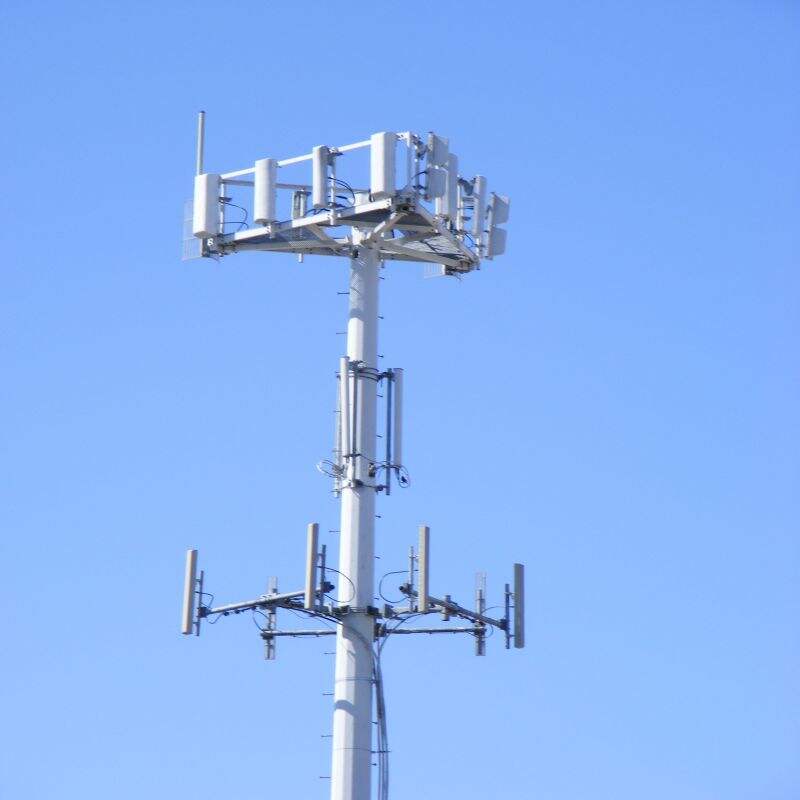
Selecting the appropriate base geometry for a lattice tower represents one of the most critical engineering decisions in telecommunications infrastructure planning. The choice between a triangular and square base configuration fundamentally influences structural performance, installation complexity, maintenance accessibility, and long-term operational costs. For project managers, structural engineers, and telecom operators evaluating tower specifications, understanding the mechanical principles, site-specific constraints, and application requirements that govern this decision becomes essential to optimizing network deployment strategy and ensuring infrastructure reliability throughout the tower's operational lifespan.
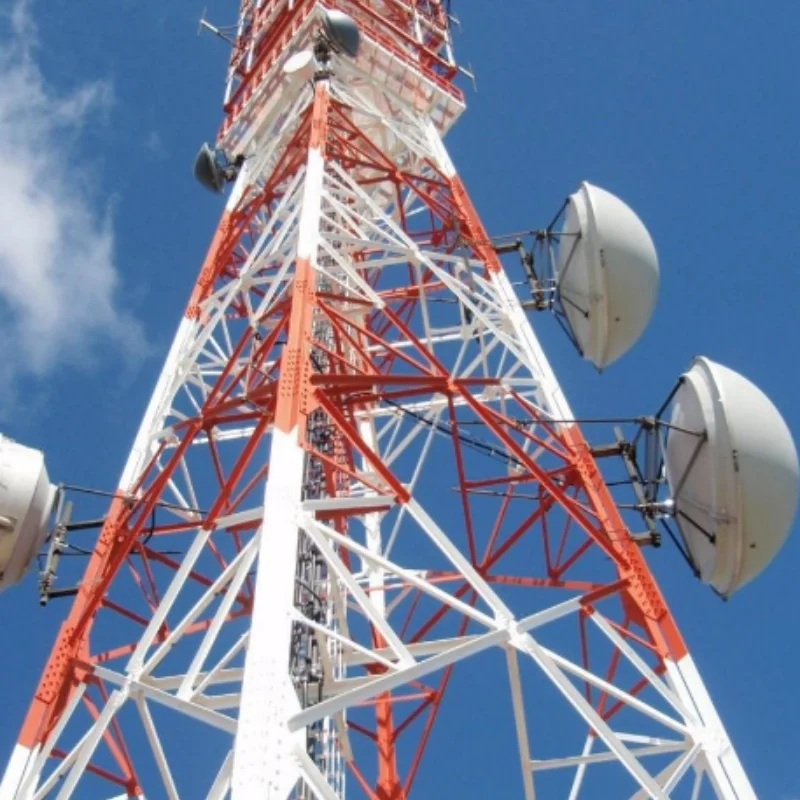
The triangular versus square base decision extends far beyond simple geometric preference, encompassing load distribution mechanics, wind resistance characteristics, foundation engineering requirements, climbing safety considerations, and equipment mounting flexibility. Each configuration delivers distinct advantages under specific operational contexts, making the selection process inherently dependent on careful analysis of site conditions, antenna payload requirements, height specifications, maintenance protocols, and budget parameters. This comprehensive examination provides the technical framework and practical decision criteria necessary to determine which lattice tower base geometry aligns optimally with your infrastructure objectives and operational environment.
Understanding Base Geometry Impact on Structural Mechanics
Load Distribution Principles in Triangular Configurations
The triangular base lattice tower configuration establishes three primary load-bearing legs arranged in an equilateral or isosceles triangular pattern, creating a structural system that distributes vertical loads and lateral forces through three foundation points. This three-point geometry offers inherent stability advantages in scenarios where minimizing foundation footprint becomes paramount, as the configuration achieves structural equilibrium through fewer ground contact points while maintaining adequate load distribution capacity. The triangular arrangement proves particularly effective in managing compressive forces along the vertical axis, with each leg承受ing approximately equal loading under symmetric antenna configurations and uniform wind pressure conditions.
From a structural mechanics perspective, triangular base lattice tower designs benefit from the geometric principle that three points always define a plane, eliminating potential rocking or differential settlement issues that can emerge in four-point configurations on uneven terrain. This inherent stability characteristic reduces foundation leveling requirements and simplifies site preparation in challenging geological conditions. The triangular configuration also generates smaller lateral dimensions at the base compared to equivalent-capacity square designs, enabling installation in constrained urban environments or on property parcels with restricted access corridors where site boundaries limit tower footprint options.
However, the three-leg arrangement introduces complexity in equipment mounting and maintenance access planning. The triangular lattice tower geometry creates smaller internal working spaces between structural members, potentially limiting the physical dimensions of equipment shelters, cable management systems, and technician maneuvering room during installation and service operations. Additionally, the asymmetric load paths inherent in three-point support require more sophisticated structural analysis when designing for non-uniform antenna arrays or when evaluating performance under oblique wind loading scenarios that do not align with the tower's primary geometric axes.
Structural Advantages of Square Base Geometry
Square base lattice tower configurations employ four vertical load-bearing legs positioned at the corners of a square or rectangular footprint, establishing a structural framework that provides superior torsional resistance and enhanced equipment mounting versatility. The four-point foundation system distributes loads more uniformly across the tower base, reducing individual foundation loads compared to equivalent triangular designs and offering improved stability against twisting forces generated by asymmetric antenna arrays or eccentric ice loading conditions. This geometric arrangement proves particularly advantageous for towers supporting multiple operators or dense antenna configurations requiring substantial equipment mounting surfaces and internal access space.
The square lattice tower configuration creates larger internal dimensions between structural members, facilitating easier technician access during maintenance operations and providing greater flexibility for mounting equipment platforms, cable ladder systems, and auxiliary infrastructure. The four-sided geometry enables more straightforward antenna sector alignment for cellular applications, as tower faces naturally correspond to common sector deployment patterns without requiring complex mounting bracket adaptations. This alignment simplicity reduces installation time and improves maintenance efficiency by providing clearer reference planes for equipment orientation and sector optimization procedures.
From a structural engineering perspective, square base lattice tower designs offer more redundancy in load distribution, as forces can redistribute among four foundation points rather than three if differential settlement or localized foundation degradation occurs over the structure's operational life. The symmetrical four-point geometry also simplifies structural analysis calculations and reduces design complexity when evaluating multi-directional loading scenarios, potentially lowering engineering costs during the design phase and expediting regulatory approval processes. The enhanced torsional rigidity inherent in square configurations provides superior performance under combined loading conditions involving simultaneous wind pressure, ice accumulation, and seismic activity.
Comparative Wind Resistance Characteristics
Wind loading represents the dominant design consideration for lattice tower structures, and base geometry significantly influences aerodynamic performance characteristics. Triangular lattice tower configurations generally present smaller projected areas to wind forces when oriented optimally, potentially reducing overall wind loading magnitude compared to square designs of equivalent height and capacity. The three-faced geometry creates a more streamlined profile that can minimize drag coefficients under certain wind approach angles, particularly when the triangular configuration aligns with prevailing wind directions at the installation site.
Square base lattice tower structures typically exhibit higher wind resistance coefficients due to their larger projected surface area and four-faced geometry, which presents substantial frontal areas regardless of wind direction. However, this apparent disadvantage diminishes in practical applications because most telecommunication sites experience variable wind directions throughout the year, negating orientation-specific advantages. The square configuration's enhanced structural rigidity and superior torsional resistance often compensate for increased wind loading by providing better dynamic response characteristics and reducing deflection amplitudes under gusty wind conditions that can induce resonant vibrations in slender structures.
Wind tunnel testing and computational fluid dynamics analysis demonstrate that base geometry effects on wind loading become less significant as tower height increases and antenna loading dominates the overall aerodynamic profile. For tall lattice tower installations exceeding 50 meters, the selection between triangular and square bases exerts minimal influence on total wind forces compared to antenna configuration, mounting hardware geometry, and ice accumulation factors. Consequently, wind resistance considerations alone rarely determine base geometry selection except in extreme exposure environments or specialized applications where aerodynamic optimization delivers measurable cost reductions through reduced structural steel requirements.
Site-Specific Factors Governing Configuration Selection
Foundation Engineering and Geological Constraints
Foundation design requirements represent a critical determinant in lattice tower base geometry selection, as triangular and square configurations impose substantially different foundation loading patterns and construction demands. Triangular lattice tower foundations require three anchor bolt assemblies or pier foundations, reducing excavation volume and concrete quantities compared to four-point square configurations of similar capacity. This foundation economy proves particularly valuable in remote locations where construction material transportation costs dominate project budgets or in urban environments where subsurface utility congestion limits foundation installation options.
Geological conditions at the installation site fundamentally influence foundation feasibility and cost differentials between base geometries. In areas with good bearing capacity soils and uniform subsurface conditions, the foundation cost advantage of triangular lattice tower configurations increases significantly, as each foundation element can be optimally sized for actual loading without compensating for geological variability across multiple foundation points. Conversely, sites with variable soil conditions, shallow bedrock, or contaminated soils may favor square base designs where load redistribution capabilities among four foundations provide resilience against differential settlement and reduce the consequences of localized foundation performance degradation.
Seismic design requirements introduce additional complexity into foundation geometry selection. Square base lattice tower configurations generally provide superior earthquake resistance through their enhanced torsional rigidity and symmetrical load distribution characteristics, which better accommodate the multi-directional ground accelerations typical of seismic events. Building code provisions in high seismicity regions often impose stricter design requirements on triangular configurations, potentially negating their foundation cost advantages through increased reinforcement requirements or larger foundation dimensions necessary to satisfy lateral stability criteria under combined gravity and seismic loading scenarios.
Site Access and Construction Logistics
Physical site access characteristics significantly influence the practicality of different lattice tower base geometries, particularly in constrained urban environments or remote rural locations with limited transportation infrastructure. Triangular base configurations generally require smaller construction footprints and narrower access corridors, enabling installation in tight urban spaces between existing buildings or along narrow right-of-way parcels where square tower foundations would exceed available land dimensions. The reduced foundation count also simplifies construction sequencing and decreases the duration of heavy equipment occupation on site, minimizing disruption in active urban areas.
Transportation logistics for structural steel components favor triangular lattice tower designs in certain scenarios, as the longer individual leg sections and smaller quantity of primary vertical members can reduce shipping complexity compared to square configurations requiring four main legs plus additional bracing elements. However, this advantage diminishes for modular tower systems where both triangular and square sections ship in standardized segment dimensions. Construction crane requirements and rigging complexity show minimal variation between base geometries for towers below 40 meters, though taller installations may favor square configurations that provide more stable platforms during section assembly and lifting operations.
Site preparation requirements differ substantially between base geometries in challenging terrain conditions. Triangular lattice tower foundations adapt more readily to sloped sites, as the three-point configuration allows greater flexibility in accommodating elevation differences among foundation locations without requiring extensive cut-and-fill earthwork. Square base designs typically demand more comprehensive site leveling to ensure proper load distribution among all four foundations, potentially increasing site preparation costs in mountainous terrain or areas with significant topographic relief. These earthwork considerations often prove decisive in rural deployments where minimizing environmental disturbance and reducing construction site footprint align with regulatory requirements and community acceptance objectives.
Space Constraints and Property Boundaries
Property boundary constraints and zoning setback requirements frequently determine lattice tower base geometry feasibility in urban and suburban deployment scenarios. Triangular configurations offer distinct advantages when working within restrictive property dimensions, as their smaller footprint enables compliance with setback requirements that would preclude square base installations. The three-point geometry can often fit within irregular property parcels or navigate around existing structures and utilities more effectively than square designs requiring symmetrical clearances in all directions from the tower centerline.
Colocation considerations introduce additional spatial complexity favoring one geometry over another depending on existing site infrastructure. Sites hosting multiple lattice tower structures or combining towers with equipment buildings and ground-mounted infrastructure typically benefit from square base configurations that align more naturally with rectangular building footprints and facilitate orthogonal site layout planning. The parallel faces of square towers simplify the integration of access pathways, equipment shelters, and utility corridors into coherent site designs that maximize usable space and maintain clear circulation patterns for maintenance vehicles and personnel.
Future expansion planning should influence initial base geometry selection, as triangular lattice tower sites generally offer limited flexibility for adding adjacent structures or expanding equipment compounds without major site reconfiguration. Square base installations provide more straightforward expansion pathways, with tower faces establishing clear reference planes for positioning supplementary equipment platforms, adding sector antennas, or installing microwave dishes in standardized mounting configurations. Organizations anticipating technology upgrades or capacity expansions over the tower's operational life typically realize long-term value advantages from square base configurations despite potentially higher initial construction costs.
Operational Considerations and Maintenance Requirements
Climbing Safety and Technician Access
Maintenance access and climbing safety represent critical operational factors distinguishing triangular and square lattice tower configurations. Square base designs universally provide superior climbing ergonomics and safety characteristics, as the larger internal dimensions between structural members accommodate standard ladder systems and safety climb devices more comfortably. The four-sided geometry creates natural rest platforms at section joints and offers multiple climbing routes, enabling safer two-person maintenance operations and facilitating emergency descent planning if weather conditions deteriorate during service work.
Triangular lattice tower configurations present more challenging climbing conditions due to tighter internal spacing between structural members, which constrains technician movement and limits the effectiveness of certain fall protection systems. The three-sided geometry reduces options for positioning safety climb rails and may require specialized climbing equipment designed specifically for narrow tower profiles. Maintenance procedures involving heavy tools or equipment transport to upper tower sections become more difficult in triangular configurations, potentially increasing labor time and associated costs for routine service operations throughout the structure's operational life.
Regulatory compliance with telecommunications tower safety standards increasingly favors square base lattice tower designs in jurisdictions implementing stringent fall protection requirements. Modern safety regulations often mandate continuous fall arrest systems or safety climb devices meeting specific dimensional clearances that triangular tower geometries cannot accommodate without significant structural modifications. Organizations prioritizing comprehensive safety programs and seeking to minimize liability exposure typically specify square base configurations despite potential cost premiums, recognizing that enhanced climbing safety reduces insurance costs, improves technician retention, and demonstrates commitment to employee welfare that strengthens corporate reputation.
Equipment Mounting Flexibility and Antenna Optimization
Antenna mounting flexibility represents a decisive operational advantage of square base lattice tower configurations, particularly for cellular network deployments requiring precise sector alignment and complex antenna arrays. The four faces of square towers naturally accommodate three-sector cellular configurations with one face reserved for microwave backhaul links, providing optimal sector spacing without complex mounting bracket engineering. This geometric alignment simplifies RF optimization procedures and enables consistent sector orientation across multiple sites, reducing network planning complexity and improving system performance predictability.
Triangular lattice tower structures inherently limit antenna mounting options due to the 120-degree face spacing that does not align with standard cellular sector patterns. Operators deploying three-sector configurations on triangular towers must either accept compromised sector alignment or invest in custom mounting brackets that extend antennas beyond the tower face to achieve desired azimuth orientations. These mounting adaptations increase wind loading, complicate structural analysis, and potentially require more frequent bracket inspections to ensure mounting integrity under dynamic loading conditions. The geometric constraints of triangular configurations become particularly problematic when accommodating multiple operators or dense small cell deployments requiring numerous antenna positions around the tower perimeter.
Future technology evolution considerations favor square base lattice tower installations for organizations anticipating network densification or advanced antenna system deployments. The emergence of massive MIMO antenna arrays, multi-band radio equipment, and integrated small cell solutions demands mounting surfaces capable of supporting heavier equipment loads and providing sufficient spacing for proper antenna isolation. Square configurations deliver superior capacity for accommodating these evolving technologies without major structural modifications, protecting long-term infrastructure investment value as wireless technologies advance beyond current 5G specifications into future generations.
Maintenance Cost Implications Over Tower Lifespan
Long-term maintenance cost analysis reveals significant operational expense differences between triangular and square lattice tower configurations stemming from access complexity, inspection requirements, and structural maintenance procedures. Square base towers typically incur lower cumulative maintenance costs over 20-year operational periods due to faster inspection completion times, reduced specialized equipment requirements, and fewer safety-related work delays. The enhanced access characteristics enable more efficient preventive maintenance scheduling and facilitate rapid emergency repairs when equipment failures or storm damage necessitate immediate technician deployment.
Corrosion management and structural preservation represent ongoing maintenance obligations throughout lattice tower operational life, with base geometry influencing inspection thoroughness and coating repair feasibility. Square configurations provide better visual access to critical connection points and facilitate more comprehensive structural assessments during routine inspections, enabling early detection of corrosion initiation or connection degradation before problems compromise structural integrity. The improved access also simplifies coating repair procedures, allowing maintenance teams to apply protective treatments more effectively and extend tower service life through proactive preservation rather than reactive replacement.
Insurance and liability considerations increasingly influence total cost of ownership calculations for telecommunication infrastructure operators. Square base lattice tower installations generally qualify for favorable insurance rates due to superior safety characteristics and reduced incident probability compared to triangular configurations. Risk management professionals evaluating comprehensive infrastructure portfolios recognize that climbing-related accidents represent significant financial and reputational liabilities, making the incremental construction cost premium for square base towers financially justified through reduced insurance expenses and lower exposure to costly injury claims over the structure's operational lifespan.
Decision Framework and Selection Methodology
Quantitative Evaluation Criteria
Developing a systematic decision framework for lattice tower base geometry selection requires establishing quantitative evaluation criteria that capture both initial capital costs and lifecycle operational expenses. Foundation cost differentials typically favor triangular configurations by 15-25% in good soil conditions, representing substantial savings on individual projects but potentially misleading when considered without operational cost implications. Comprehensive financial analysis must incorporate structural steel quantities, foundation materials, construction labor, long-term maintenance requirements, and technology upgrade flexibility to determine true total cost of ownership over typical 20-30 year infrastructure planning horizons.
Structural capacity and loading margin analysis should evaluate each lattice tower configuration against specific site requirements including maximum antenna loading, ice accumulation expectations, wind exposure category, and seismic design parameters. Square base towers generally provide 10-15% greater torsional rigidity compared to equivalent triangular designs, translating to improved performance margins under combined loading scenarios. These structural advantages enable square configurations to accommodate future equipment additions without major reinforcement, protecting infrastructure investment against technology evolution that increases antenna quantities or equipment weights beyond initial design assumptions.
Safety performance metrics should receive weighted consideration in the decision matrix, quantifying differences in climbing time, fall protection system compatibility, emergency descent options, and historical incident rates between geometries. Organizations can assign monetary values to safety improvements through insurance premium reductions, worker compensation cost avoidance, and productivity gains from faster maintenance task completion. When properly quantified, these safety-related benefits often justify square base lattice tower selection even when initial capital costs exceed triangular alternatives by 20-30%, particularly for operators managing large infrastructure portfolios where cumulative risk exposure creates substantial financial liability.
Site-Specific Feasibility Assessment
Conducting thorough site-specific feasibility assessment represents an essential step in base geometry selection, as local conditions frequently override generalized preferences derived from theoretical analysis. Geotechnical investigation results establish foundation feasibility boundaries, with soil bearing capacity, groundwater conditions, and subsurface obstructions determining whether triangular foundation economies remain achievable or whether site conditions neutralize inherent cost advantages. Sites requiring deep foundations, specialized geotechnical improvements, or working around underground utilities may show minimal cost variation between base geometries, shifting decision emphasis toward operational and functional considerations.
Regulatory environment analysis must evaluate local building codes, telecommunications infrastructure standards, and permitting authority preferences that may constrain or favor particular lattice tower configurations. Some jurisdictions explicitly prohibit triangular towers in certain zoning districts due to aesthetic concerns or maintain prescriptive structural requirements that effectively mandate square base designs for towers exceeding specified heights. Understanding these regulatory constraints early in project planning prevents costly design modifications during permit review and accelerates project timelines by aligning initial design selections with authority expectations and approval precedents.
Network planning integration requires evaluating how individual tower geometry selections affect broader infrastructure strategy and multi-site deployment efficiency. Telecommunications operators developing standardized tower specifications across geographic regions often specify single base geometries to simplify engineering procedures, streamline construction contractor qualifications, and facilitate maintenance crew training across multiple market areas. While site-specific optimization might indicate different base geometries for individual locations, operational efficiency gains from fleet standardization frequently justify consistent geometry specifications even when localized analysis suggests alternative configurations would deliver marginal performance or cost advantages.
Making the Final Selection Decision
The final lattice tower base geometry decision should synthesize technical, financial, operational, and strategic considerations through a structured evaluation process that assigns appropriate weights to factors reflecting organizational priorities and project-specific constraints. For urban deployments prioritizing site acquisition flexibility and minimizing property requirements, triangular configurations offer compelling advantages that may override operational limitations. Conversely, rural network expansion projects emphasizing long-term operational efficiency and maintenance cost containment typically realize superior lifecycle value from square base selections despite higher initial capital requirements.
Risk tolerance and safety culture represent crucial organizational factors influencing optimal base geometry choices. Companies implementing industry-leading safety programs and maintaining comprehensive fall protection standards should strongly favor square lattice tower configurations that enable full compliance with advanced safety protocols without requiring specialized equipment or extraordinary procedural controls. Organizations willing to accept more restrictive maintenance procedures and invest in specialized climbing safety systems may find triangular configurations acceptable, particularly when capital budget constraints limit project feasibility or competitive pressures demand minimizing initial deployment costs.
Technology evolution planning should inform base geometry selection for operators anticipating significant network upgrades or infrastructure sharing arrangements during tower operational life. Square base lattice tower installations provide superior flexibility for accommodating emerging technologies, supporting multiple operators, and adapting to changing regulatory requirements without major structural modifications. The incremental construction cost premium for square configurations represents valuable insurance against premature obsolescence, protecting long-term asset value in rapidly evolving telecommunications markets where infrastructure investment horizons extend decades while technology lifecycles compress into five-year replacement cycles.
FAQ
What are the typical cost differences between triangular and square base lattice towers?
Triangular base lattice towers typically cost 15-25% less than equivalent square base designs for the foundation and structural steel components in standard soil conditions. However, this initial capital cost advantage diminishes when considering total project costs including specialized climbing safety equipment, custom antenna mounting brackets, and potentially longer construction timelines for triangular configurations. Lifecycle cost analysis over 20-30 year operational periods often reveals that square base towers deliver lower total cost of ownership despite higher initial investment, primarily due to reduced maintenance expenses, faster inspection procedures, and greater flexibility for technology upgrades without major structural modifications.
Do building codes or industry standards favor one base geometry over another?
Most telecommunications tower building codes remain geometry-neutral, establishing performance-based requirements for structural capacity, foundation design, and safety features that both triangular and square configurations can satisfy through appropriate engineering. However, jurisdictions implementing prescriptive safety standards for climbing access, fall protection systems, and maintenance procedures increasingly favor square base designs that more readily accommodate mandated safety equipment and clearance dimensions. Additionally, some local zoning ordinances express aesthetic preferences for particular tower geometries, and certain wireless industry standards recommend square configurations for multi-tenant sites or locations requiring extensive equipment mounting flexibility and future expansion capability.
Can I convert a triangular base tower to square configuration later if needs change?
Converting an existing triangular lattice tower to square base configuration represents a technically impractical and economically unfeasible modification due to fundamental differences in foundation systems, structural load paths, and member connections between geometries. Organizations requiring different base configurations to accommodate changing operational needs should plan for complete tower replacement rather than conversion. This reality emphasizes the importance of thorough initial planning and conservative capacity specifications that account for potential technology evolution and equipment loading increases over the structure's operational lifespan, as base geometry selection establishes permanent constraints on functional capabilities and expansion options.
Which base geometry performs better in high wind or seismic regions?
Square base lattice towers generally demonstrate superior performance in both high wind exposure environments and seismic design regions due to their enhanced torsional rigidity, symmetrical load distribution characteristics, and greater structural redundancy compared to triangular configurations. The four-point foundation system provides better resistance to combined loading scenarios typical of extreme weather events and earthquake ground motions, while the increased internal bracing inherent in square geometries improves dynamic response characteristics that minimize deflection amplitudes and reduce fatigue stress accumulation. However, properly engineered triangular towers can achieve equivalent performance levels through increased member sizes and enhanced connection designs, though typically at cost premiums that eliminate their inherent foundation economy advantages in standard applications.
Table of Contents
- Understanding Base Geometry Impact on Structural Mechanics
- Site-Specific Factors Governing Configuration Selection
- Operational Considerations and Maintenance Requirements
- Decision Framework and Selection Methodology
-
FAQ
- What are the typical cost differences between triangular and square base lattice towers?
- Do building codes or industry standards favor one base geometry over another?
- Can I convert a triangular base tower to square configuration later if needs change?
- Which base geometry performs better in high wind or seismic regions?