 EN
EN


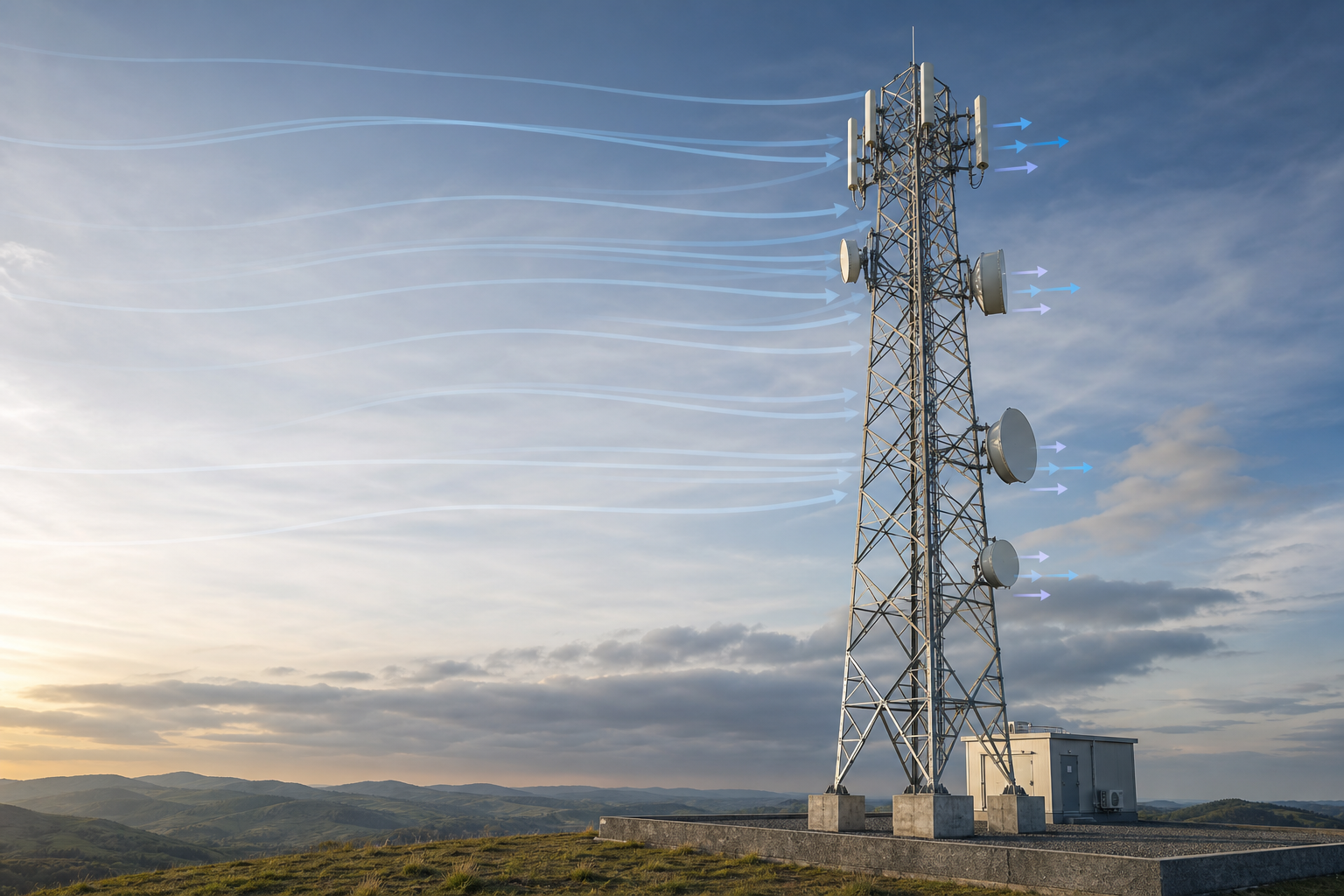
Communication tower design begins with loads, not with height alone. Two towers of the same height can require very different structural solutions when they are installed in different wind environments or carry different antennas, microwave dishes, platforms, cables, and accessories. For this reason, a tower quotation based only on height and quantity is usually preliminary.
For telecom operators, EPC contractors, engineering consultants, infrastructure owners, and project procurement teams, understanding the relationship between wind load and antenna loading helps create a clearer request for quotation. It also reduces the risk of comparing offers that are based on different assumptions. This guide explains the main inputs that affect communication tower structural design and the information a manufacturer needs before preparing a project-based proposal.
1. Why Wind Often Controls Communication Tower Design
A communication tower is a tall, exposed structure. Its steel members, antennas, mounts, ladders, platforms, cables, and other attachments all interact with the wind. The resulting forces must be transferred through the tower body, connections, base, and foundation.
Wind effects are not determined by a single speed value. The design basis may consider the wind-speed definition required by the governing standard, the probability level, terrain or exposure category, topography, height above ground, directionality, structural shape, equipment geometry, and other project factors. A wind value copied from another project may therefore be unsuitable even when the two towers have the same nominal height.
As tower height increases, wind exposure and structural response can change. Equipment mounted near the top can also create a greater overturning effect than similar equipment installed at a lower level. This is why antenna elevation must be included in the loading schedule instead of providing only total equipment weight.
2. Design Wind Information Must Be Clearly Defined
Before a communication tower manufacturer can evaluate a project, the buyer should identify the location and the required design basis. At minimum, the RFQ should provide the project country, site or city, tower height, applicable standard, and any specified wind criteria.
The wind-speed definition should be stated exactly as required by the project documents. Different standards or specifications may use different averaging periods, reference heights, return periods, importance factors, exposure definitions, or load combinations. A number without its definition can easily be misunderstood.
Terrain also matters. An open coastal area, flat rural site, dense urban area, industrial zone, mountain ridge, or elevated location may create different exposure conditions. Topographic effects and nearby obstructions should be reviewed according to the applicable engineering method. If the final information is not available, the RFQ should mark it as pending rather than allowing each bidder to assume a different condition.
3. What Antenna Loading Means
Antenna loading is more than the total weight of the telecom equipment. Gravity load is important, but wind acting on the exposed faces of antennas, dishes, mounts, cables, and platforms can be a major design input.
For every antenna or accessory, the engineering team may need its type, quantity, dimensions, mass, projected area or manufacturer-provided wind data, mounting elevation, orientation, offset from the tower, bracket arrangement, and planned location around the tower face. The same equipment can influence the tower differently when its height, orientation, or stand-off distance changes.
Sector antennas, microwave dishes, remote radio units, cable bundles, GPS antennas, mounts, and other appurtenances should be listed separately. Combining all equipment into one estimated area can hide important differences in shape and location.
Effective Projected Area and Equipment Geometry
In telecom engineering, effective projected area, often abbreviated as EPA, is commonly used to describe how equipment interacts with wind. It connects the exposed area with aerodynamic effects. The value should come from an appropriate equipment source or be determined using the method required by the governing design standard.
A flat panel antenna, a cylindrical component, and a microwave dish do not present the same geometry to the wind. Orientation also matters. For a dish, diameter and mounting direction are important; for a sector antenna, width, depth, height, and azimuth may affect the loading case. The tower designer should evaluate the equipment arrangement rather than treating every item as an identical rectangle.
4. Mounting Height Changes the Structural Effect
The position of an antenna can be as important as its size. Wind force applied higher on a tower produces a larger overturning effect at the base. It can also increase demands in tower legs, bracing, connections, anchor systems, and foundations.
A complete antenna schedule should therefore specify the centerline elevation of each item. If several antennas are installed on one platform, their positions and mounting frames should be shown. Microwave dishes and large mounts require particular attention because their projected area, offset, and elevation can strongly affect local and global structural demands.
Equipment installed away from the tower face can introduce additional moment through the mounting bracket. The bracket itself also adds wind area and weight. These details should be included when evaluating a new tower or checking capacity for future equipment.
5. Tower Type Influences Wind Response and Equipment Arrangement
Different tower forms provide different equipment-mounting conditions.
Self-Supporting Lattice Towers
Self-supporting lattice towers are often used when a project needs several antenna elevations, multiple dishes, platforms, or expansion capacity. Their open steel framework provides many possible mounting locations, but the tower body, bracing, platforms, ladders, cable systems, and accessories all contribute to wind loading.
The face width, leg configuration, section geometry, and equipment arrangement should be coordinated. A quotation should clearly state the assumed antenna schedule and included mounts.
Monopole Towers
A monopole uses a compact tubular structure and can be suitable where land use or appearance is important. Its shaft diameter, wall thickness, section connections, base arrangement, and foundation reactions depend on the load combination and equipment layout.
Antennas may be mounted directly, on platforms, or with brackets. Large stand-off distances or concentrated equipment near the top can influence deflection and connection design. Buyers should provide the proposed mounting arrangement when requesting a monopole quotation.
Guyed Towers
A guyed tower uses guy wires and anchors to stabilize a slender mast. Wind and antenna loads affect the mast, guy tensions, connection points, anchors, and foundation system. The available land, anchor geometry, soil conditions, maintenance access, and installation tolerances are important project inputs.
A complete quotation should identify the assumed guy arrangement, antenna elevations, mounts, anchor-related scope, and installation responsibilities.
6. Future Loading Should Be Planned, Not Assumed
Telecom sites often change during their service life. Additional sector antennas, microwave links, radios, cables, platforms, or replacement equipment may be installed later. If future expansion is expected, it should be defined as a reserved load case during the design stage.
A vague request for “extra capacity” is difficult to evaluate. A better approach is to specify the future equipment type, quantity, dimensions or wind data, weight, mounting elevation, and orientation. This allows the designer to distinguish the initial installed configuration from the reserved configuration.
Future loading can affect steel quantity, member sizes, connections, foundation reactions, transportation, and price. Defining it early supports more transparent decision-making than attempting to modify the tower after fabrication or installation.
7. Other Loads and Serviceability Requirements
Wind and antenna loads are central, but they are not the only design considerations. Depending on the project, the engineering basis may also need to address dead load, maintenance load, platform live load, cable load, ice where applicable, seismic conditions, temperature effects, construction or erection conditions, and load combinations required by the governing standard.
Serviceability is also important. Excessive displacement or rotation can affect antenna alignment and network performance even when strength requirements are satisfied. Project documents should identify any required deflection, twist, or sway limits and the equipment to which they apply.
The foundation design needs reliable reactions from the tower analysis and appropriate geotechnical information. Soil bearing, uplift resistance, groundwater, drainage, and construction conditions are site-specific. A reference foundation concept should not be treated as a final design without confirmed soil data and local engineering review.
8. How Loads Affect Tower Cost and Quotation Comparison
Wind conditions and antenna loading influence more than the tower weight. They may affect member sizes, connection details, bolt quantities, platforms, brackets, base plates, anchor systems, foundation reactions, galvanizing workload, packing, transportation, and erection planning.
When two suppliers quote the same tower height at very different prices, the first step is to compare their design assumptions. Check whether both quotations use the same wind basis, tower type, antenna schedule, mounting elevations, future loading, accessory scope, design standard, documentation package, and foundation boundary.
A lower price based on lighter or incomplete assumptions is not directly comparable with a quotation that includes the full project load schedule. Technical deviations and exclusions should be listed before commercial evaluation.
9. Information Needed for a Project-Based Tower Proposal
To support an efficient technical review, include the following information in the RFQ:
- Project name, country, site location, and coordinates when available.
- Required tower type, height, quantity, and intended application.
- Governing structural standard and project specification.
- Design wind information with its definition and exposure requirements.
- Terrain, topography, temperature, corrosion, seismic, and ice conditions where applicable.
- Antenna and equipment schedule with type, quantity, dimensions, weight, wind data, orientation, and installation elevation.
- Initial equipment configuration and separately defined future loading.
- Platforms, ladders, cable supports, mounts, safety systems, and other accessories.
- Soil or geotechnical information and the required foundation-design boundary.
- Required calculations, drawings, material documents, inspection records, delivery terms, destination, and schedule.
When an input is unavailable, label it as pending and request a clear design assumption. This produces a more useful quotation and makes supplier comparisons easier.
10. Standards and Engineering Review
The applicable standard must be confirmed by the project owner, consultant, or relevant authority. TIA describes the TIA-222 series as a structural standard for antenna-supporting structures and antennas, while ETSI guidance also notes that structural design should consider wind loading from components such as antennas, feeders, and associated hardware.
The correct edition, local requirements, project-specific criteria, and professional approval process should be identified before final design. A blog article or preliminary quotation cannot replace project engineering calculations, drawing review, geotechnical verification, or local regulatory approval.
Request a Communication Tower Load Review
Hebei Junhao Communication Technology Service Co., Ltd supplies communication towers, power transmission towers, communication accessories, and steel tower structures. For a communication tower inquiry, send us the project location, tower type, tower height, quantity, wind criteria, antenna schedule, mounting elevations, future loading, required accessories, design standard, destination, and delivery target.
Contact Hebei Junhao Communication Technology Service Co., Ltd to discuss the available load information and request a project-based communication tower proposal.
Table of Contents
- 1. Why Wind Often Controls Communication Tower Design
- 2. Design Wind Information Must Be Clearly Defined
- 3. What Antenna Loading Means
- 4. Mounting Height Changes the Structural Effect
- 5. Tower Type Influences Wind Response and Equipment Arrangement
- 6. Future Loading Should Be Planned, Not Assumed
- 7. Other Loads and Serviceability Requirements
- 8. How Loads Affect Tower Cost and Quotation Comparison
- 9. Information Needed for a Project-Based Tower Proposal
- 10. Standards and Engineering Review
- Request a Communication Tower Load Review