 EN
EN


Cell tower design faces one of its most challenging questions in modern telecommunications infrastructure: can a single structural blueprint successfully serve regions with vastly different environmental demands? Engineers and telecom operators frequently encounter scenarios where deploying standardized tower solutions across diverse geographic territories would significantly reduce costs and accelerate network expansion. The technical reality, however, involves complex structural engineering considerations that determine whether a universal cell tower design can genuinely withstand the varying wind loads and seismic forces encountered from coastal hurricane zones to earthquake-prone mountain regions. Understanding the adaptability potential of tower designs requires examining both the fundamental engineering principles governing structural resilience and the practical modification strategies that enable configuration flexibility without compromising safety standards.
The answer is affirmative but conditional: a single cell tower design can indeed be adapted for different wind and seismic zones through strategic engineering modifications, parametric design approaches, and zone-specific component adjustments. Rather than creating entirely separate tower architectures for each environmental classification, modern structural engineering enables baseline designs that incorporate modular reinforcement capabilities, adjustable foundation systems, and scalable bracing configurations. This adaptability stems from understanding that wind and seismic forces, while fundamentally different in their loading characteristics, can be addressed through calculated variations in material specifications, connection detailing, and structural member sizing. The feasibility of adaptation depends on establishing a robust core cell tower design framework that intentionally accommodates performance envelope expansion, allowing the same geometric configuration to meet dramatically different environmental load combinations through controlled engineering interventions rather than complete redesign.
Engineering Fundamentals Behind Adaptable Cell Tower Design
Understanding Load Path Differences Between Wind and Seismic Forces
The foundation of adaptable cell tower design begins with recognizing how wind and seismic loads differ fundamentally in their application and structural response characteristics. Wind loads act as lateral pressure forces that increase with height and exposure, creating maximum stress concentrations at the tower top and upper sections where antennas and equipment platforms extend into the airstream. These forces develop gradually and maintain relatively consistent directional characteristics, allowing engineers to calculate predictable stress distributions through the vertical structure. The magnitude of wind loading varies significantly by geographic zone, with coastal regions experiencing hurricane-force sustained winds that may reach design speeds exceeding one hundred fifty miles per hour, while inland areas might only require designs addressing seventy to ninety mile-per-hour wind events.
Seismic forces, conversely, originate from ground acceleration and propagate upward through the foundation system, inducing dynamic lateral loads that cause the entire structure to experience simultaneous horizontal displacement. The cell tower design response to earthquake motion involves inertial forces proportional to the structure's mass distribution, creating different stress patterns than static wind pressure. High seismic zones require designs that accommodate ductile behavior and energy dissipation capacity, allowing controlled deformation without catastrophic failure during ground motion events. The fundamental difference lies in load application methodology: wind represents an external pressure phenomenon while seismic activity generates internal inertial responses throughout the structural system. Recognizing these distinct loading mechanisms enables engineers to develop cell tower design strategies that address both conditions through complementary rather than contradictory structural solutions.
Structural Configuration Factors That Enable Multi-Zone Adaptation
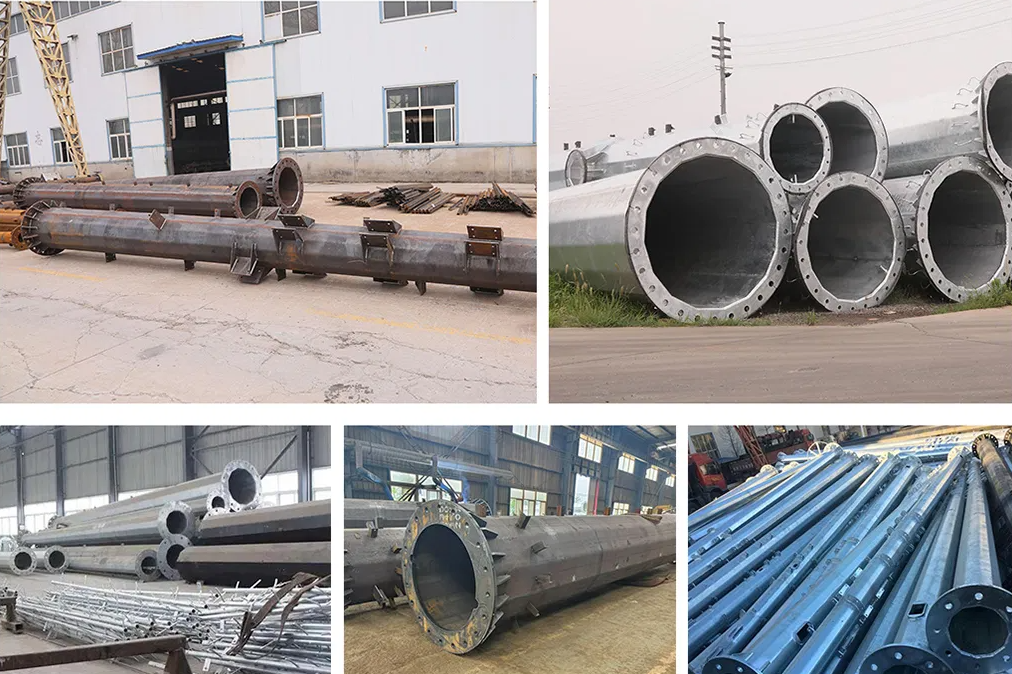
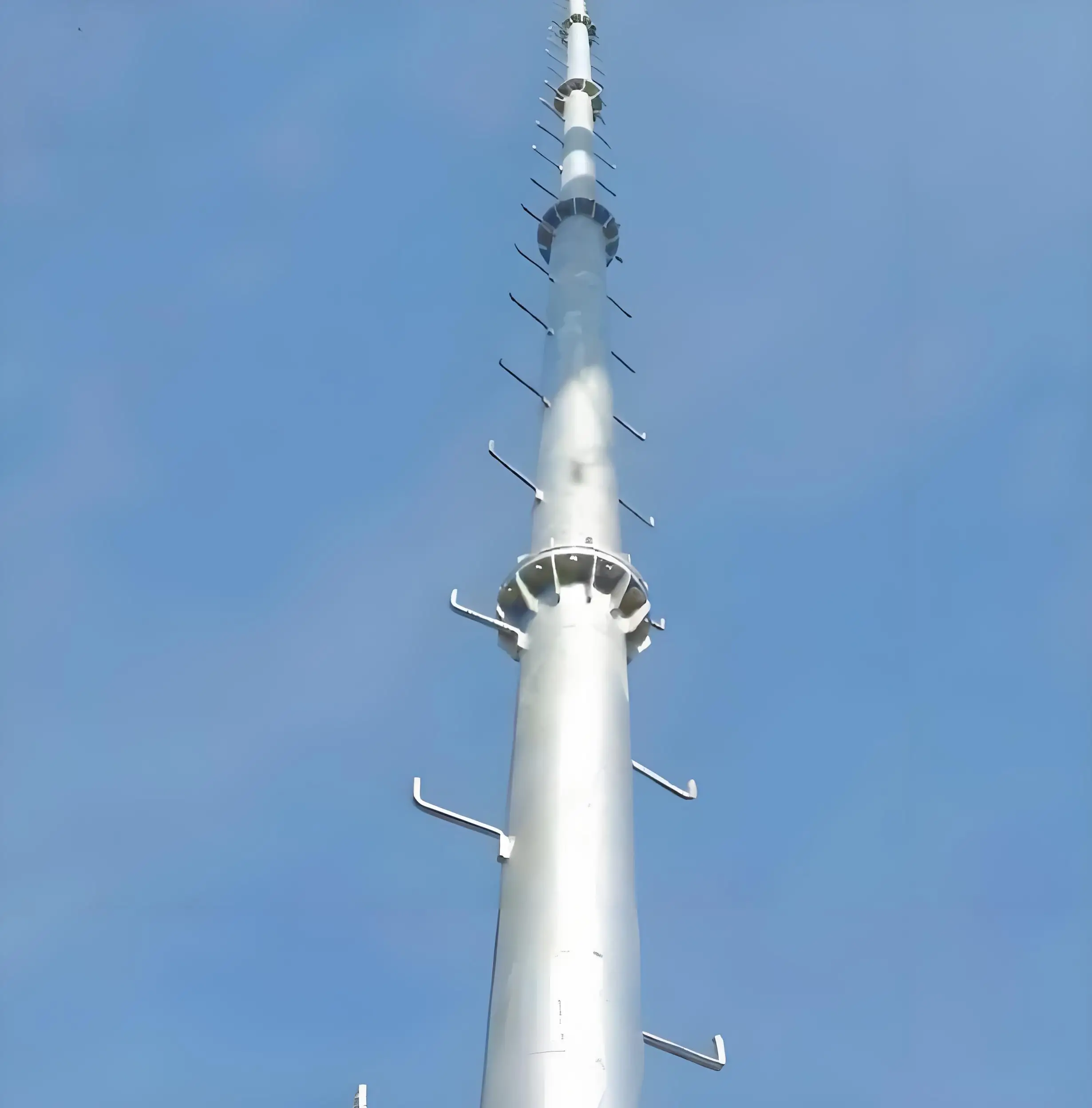
Certain cell tower design configurations inherently possess greater adaptability potential across diverse environmental zones due to their structural geometry and load distribution characteristics. Monopole towers with tubular steel construction offer particular advantages for multi-zone adaptation because their circular cross-sections provide uniform resistance to wind pressure from any direction while maintaining efficient material distribution for vertical load support. The continuous tube geometry eliminates the connection complexity found in lattice structures, reducing the number of critical failure points that might require zone-specific redesign. Additionally, monopole designs enable straightforward wall thickness adjustments and diameter modifications that directly correlate with increased load capacity, making them ideal candidates for parametric adaptation strategies.
Self-supporting lattice towers present alternative adaptation opportunities through their inherent redundancy and triangulated geometry, which naturally provides excellent resistance to both wind and seismic forces through efficient load triangulation. The cell tower design flexibility in lattice configurations emerges from the ability to modify member sizes, bracing patterns, and connection detailing without altering the overall tower footprint or height profile. Engineers can strengthen specific tower sections by increasing angle sizes or adding supplementary diagonal members in zones requiring enhanced capacity. The open lattice framework also reduces wind surface area compared to solid structures, providing inherent aerodynamic advantages that remain beneficial across all wind zones. Both monopole and lattice configurations demonstrate that geometric simplicity combined with strategic material deployment creates the foundation for successful multi-zone cell tower design adaptation.
Practical Modification Strategies for Wind Zone Variations
Adjusting Structural Components for Increased Wind Load Capacity
Adapting a baseline cell tower design for higher wind zones primarily involves strengthening the structural elements that resist lateral loading while maintaining the tower's fundamental geometry and installation methodology. For monopole configurations, this adaptation typically requires increasing the tube wall thickness in critical sections, particularly the lower third of the tower where bending moments reach maximum values under wind loading. Engineers calculate the required thickness increases based on the ratio between wind pressures in the target zone versus the baseline design zone, applying factors that account for both static pressure and dynamic gust effects. Material grade specifications may also shift from standard structural steel to higher yield strength alloys, providing additional capacity without proportional weight increases that would further burden the foundation system.
Lattice tower adaptations for enhanced wind resistance focus on member sizing optimization and connection reinforcement throughout the structure's height. The cell tower design modification process evaluates each structural angle or tube member against increased wind-induced axial and bending stresses, specifying larger sections where calculated demands exceed baseline capacities. Diagonal bracing members often require the most significant upgrades since they directly resist the lateral shear forces generated by wind pressure on the tower faces. Connection plates and bolt assemblies warrant careful review because these discrete components represent potential weak points where stress concentrations may cause premature failure under extreme wind events. Progressive adaptation might involve transitioning from bolted connections to welded joints in critical locations, eliminating the slip and bearing tolerance issues that can compromise performance under repeated load cycling typical of high wind environments.
Foundation System Adjustments for Variable Wind Exposure
Foundation requirements represent another critical adaptation dimension when deploying cell tower design across different wind zones, as increased lateral loads translate directly into greater overturning moments that must be resisted at the base interface. The foundation system must provide sufficient uplift resistance and rotational stability to prevent tower displacement under design wind events, requiring larger concrete volumes or deeper embedment depths in higher exposure categories. Spread footing foundations used in many monopole installations may require diameter expansion and reinforcement density increases to distribute the heightened bearing pressures across adequate soil contact area. Engineers conduct moment capacity calculations comparing the resisting moment provided by the foundation mass and soil bearing against the overturning moment generated by wind pressure at various tower heights.
Anchor bolt specifications constitute another zone-specific adaptation element within the foundation assembly, as these critical connectors transfer all wind-induced tensile and shear forces from the tower structure into the concrete mass. Higher wind zones necessitate larger diameter anchor bolts, increased embedment lengths, and enhanced edge distance requirements to prevent concrete breakout failures under ultimate load conditions. The cell tower design adaptation may also incorporate transition from standard cast-in-place anchor bolts to post-installed anchor systems with mechanical expansion or adhesive bonding mechanisms that provide certified performance in high-load applications. Soil conditions interact significantly with foundation adaptation requirements, as sites with weaker bearing capacity soils require proportionally larger foundation systems to achieve equivalent overturning resistance compared to installations on competent bedrock or dense granular materials.
Antenna Loading and Equipment Platform Considerations
The appurtenance loading from antennas, transmission lines, and equipment platforms contributes substantially to total wind forces acting on cell tower structures, making these components essential considerations in multi-zone adaptation strategies. Wind pressure acts not only on the tower structure itself but also on the projected area of all mounted equipment, with antennas presenting particularly significant wind surfaces due to their panel configurations and elevated mounting positions. Adapting cell tower design for higher wind zones may require limiting the number or size of antennas that can be safely mounted, establishing equipment capacity envelopes that preserve structural integrity under design wind conditions. Alternatively, mounting hardware and support structures can be reinforced to accommodate standard antenna configurations while providing the additional capacity necessary for extreme wind resistance.
Equipment platform designs require similar zone-specific adaptations, as these horizontal structures act as effective sails that capture wind pressure and transfer substantial lateral loads into the tower at discrete connection points. The cell tower design approach for high wind zones might incorporate reduced platform areas, aerodynamic edge detailing that minimizes pressure coefficients, or grated flooring systems that allow wind passage rather than presenting solid obstruction surfaces. Cable management systems and transmission line routing also factor into wind load calculations, as bundled cables can accumulate ice in winter conditions that dramatically increases their effective diameter and wind capture area. Comprehensive adaptation strategies account for these secondary loading elements through conservative design assumptions and periodic capacity verification as technology deployments evolve over the tower's operational lifetime.
Seismic Zone Adaptation Methodologies
Ductility and Energy Dissipation Requirements
Adapting cell tower design for seismic zones introduces fundamentally different structural performance objectives compared to wind-dominated regions, shifting focus from ultimate strength capacity to ductile behavior and controlled energy dissipation during ground motion events. Seismic design philosophy accepts that structures will experience inelastic deformation under major earthquake loading, requiring careful detailing to ensure this deformation occurs in predictable locations through ductile yielding rather than brittle fracture. Tower structures adapted for high seismic zones incorporate connection detailing and member proportioning that facilitates plastic hinge formation in designated regions while protecting critical elements from premature failure. This approach contrasts with pure strength-based wind design, where elastic behavior under all design load conditions represents the standard performance expectation.
Material specifications for seismic-adapted cell tower design emphasize toughness characteristics and strain capacity rather than purely maximum yield strength values. Steel grades with enhanced ductility ratios and verified Charpy V-notch impact resistance provide superior performance during the cyclic loading reversals typical of earthquake ground motion. Connection detailing becomes particularly critical in seismic adaptations, as these concentrated load transfer points must maintain integrity through multiple cycles of inelastic deformation without degradation. Welded connections often receive preference over bolted assemblies in primary seismic force-resisting elements because properly executed welds eliminate the slip and bearing play that can accumulate into unacceptable displacements under repeated loading. The cell tower design adaptation process includes explicit ductility calculations that verify adequate rotation capacity exists at potential plastic hinge locations, ensuring the structure can accommodate design-level earthquake displacements without collapse.
Foundation Embedment and Soil Interaction Factors
Foundation system adaptations for seismic zones address both the direct transmission of earthquake-induced base shear forces and the complex soil-structure interaction effects that influence overall system response characteristics. Unlike wind loading where foundation design focuses primarily on overturning resistance, seismic conditions require careful evaluation of lateral sliding resistance, rotational stiffness, and foundation embedment depth that influences the effective period of the combined tower-foundation-soil system. Deeper embedment generally increases lateral stiffness but may also increase seismic demand by reducing the structure's natural period, creating optimization challenges that require site-specific dynamic analysis rather than simple prescriptive increases in foundation dimensions.
Soil liquefaction potential represents a critical site evaluation factor when adapting cell tower design for seismic deployment, as saturated cohesionless soils may lose bearing capacity during earthquake shaking and allow catastrophic foundation settlement or tilting. Sites with identified liquefaction susceptibility require either soil improvement measures such as deep dynamic compaction or stone columns, or alternative foundation strategies including deep pier systems that extend through liquefiable layers to bearing on competent material at depth. Foundation reinforcement detailing in seismic zones emphasizes confinement of concrete through closely spaced transverse reinforcement that prevents brittle shear failures and enhances ductile compression behavior. The cell tower design adaptation must ensure foundation capacity exceeds tower yielding strength with adequate margin, implementing capacity-based design principles that force inelastic behavior into the tower structure rather than allowing foundation failure that would eliminate all system redundancy.
Height Limitations and Mass Distribution Considerations
Seismic forces acting on cell tower structures correlate directly with the distributed mass throughout the tower height and the ground acceleration amplification that occurs as seismic waves propagate upward through the structure. This fundamental relationship creates practical height limitations for towers deployed in high seismic zones, as taller structures accumulate greater total mass and experience larger displacement demands that may exceed practical ductility capacities. Adapting a cell tower design for seismic conditions might involve height restrictions compared to the same design's application in low seismic regions, or require substantial structural reinforcement that negates the economic advantages of standardized design deployment. Engineers evaluate the structure's fundamental period and compare it against the site's seismic response spectrum to identify whether the tower configuration falls into resonance amplification zones where ground motion energy concentrates.
Mass distribution optimization represents another seismic adaptation strategy, focusing equipment and antenna loads at lower elevations to reduce the moment arm through which seismic inertial forces act on the structure. This approach contradicts typical telecommunications objectives that prefer maximum antenna height for coverage optimization, creating design compromises that must balance structural performance against operational requirements. The cell tower design process for seismic zones may incorporate supplementary damping systems or base isolation technologies in extreme cases, though these sophisticated solutions typically apply only to critical communication infrastructure where performance requirements justify the additional cost and complexity. More commonly, seismic adaptation relies on straightforward member strengthening, connection enhancement, and conservative design assumptions that provide adequate safety margins without requiring specialized seismic protection technologies.
Integrated Design Approaches for Combined High Wind and High Seismic Zones
Load Combination Analysis and Governing Conditions
Certain geographic regions present the compounded challenge of both high wind exposure and significant seismic hazard, requiring cell tower design adaptations that simultaneously address both loading conditions through integrated structural solutions. Coastal California exemplifies this design scenario, where Pacific hurricane remnants and strong offshore wind patterns coincide with proximity to active fault systems capable of generating major earthquake events. The structural design process for such regions involves evaluating numerous load combination cases specified by building codes, determining which environmental condition governs design for each structural element and connection. In many cases, wind loading controls the design of upper tower sections and appurtenance connections where lateral pressure effects dominate, while seismic considerations govern foundation design and lower tower proportioning where earthquake-induced base shear and overturning moments reach maximum values.
The cell tower design approach for combined hazard zones cannot simply superimpose wind and seismic adaptations independently, as this would result in excessively conservative and economically impractical structures. Instead, engineers conduct probabilistic analysis recognizing that design-level wind and seismic events have extremely low likelihood of occurring simultaneously, allowing code-specified load combination factors that reduce the combined demand below simple additive values. However, the structure must still possess adequate capacity to resist each individual hazard at its full design intensity, requiring careful optimization to identify structural solutions that efficiently address both conditions. Material selections and connection detailing receive particular scrutiny in combined hazard applications, as specifications must satisfy both the ductility requirements for seismic performance and the fatigue resistance necessary for repeated wind load cycling throughout the tower's service life.
Parametric Design Systems and Performance-Based Engineering
Modern cell tower design increasingly employs parametric design methodologies and performance-based engineering approaches that facilitate rapid adaptation across multiple environmental zones while maintaining structural efficiency and safety compliance. Parametric design systems utilize computational algorithms that automatically adjust structural member sizes, connection details, and foundation specifications based on input parameters defining site-specific wind velocities, seismic ground motion characteristics, soil bearing capacities, and antenna loading configurations. These systems encode the fundamental engineering relationships governing structural behavior, enabling designers to explore numerous configuration variations and identify optimal solutions that meet code requirements with minimal material consumption. The parametric approach transforms zone adaptation from a labor-intensive redesign process into a systematic parameter adjustment exercise that maintains design consistency while accommodating regional variations.
Performance-based engineering extends beyond prescriptive code compliance by establishing explicit performance objectives for various hazard intensity levels, designing structures to exhibit specific behavior characteristics under defined loading scenarios. For cell tower design applications, this might involve establishing serviceability criteria that limit deflections and maintain operational capability under moderate wind events, while accepting controlled inelastic behavior and temporary service interruption under rare extreme events provided structural collapse prevention remains assured. This tiered performance approach enables more rational risk management and facilitates adaptation decisions by clearly defining what level of protection the structure provides against various hazard intensities. Advanced performance-based methodologies incorporate nonlinear dynamic analysis and probabilistic hazard assessment, though simplified performance objectives and linear analysis methods often suffice for typical telecommunication tower applications where structural configurations remain relatively straightforward compared to complex building systems.
Economic Optimization and Standardization Benefits
The business case for adaptable cell tower design rests fundamentally on economic optimization through standardization benefits that reduce engineering costs, streamline procurement processes, and accelerate deployment timelines across large telecommunication networks spanning diverse geographic territories. Developing a robust baseline tower design with documented adaptation procedures for various environmental zones eliminates redundant engineering effort for each site installation, allowing rapid customization through parametric adjustment rather than complete structural redesign. Standardized designs also enable bulk material procurement and repetitive fabrication processes that reduce unit costs through economy of scale, as manufacturers produce consistent structural components with only controlled variations in dimensions and material specifications across different zone classifications.
The cell tower design standardization approach must balance flexibility against excessive complexity, defining appropriate boundaries for the adaptation envelope beyond which site-specific custom engineering becomes more economical than forcing standardized solutions into unsuitable applications. Telecommunication operators typically establish design families covering common tower heights and capacity requirements, with each family incorporating defined adaptation ranges for wind speed, seismic design category, and ice loading conditions. This systematic approach maintains the economic advantages of standardization while ensuring structural adequacy across the deployment territory. Quality control and inspection procedures also benefit from design standardization, as field personnel become familiar with consistent connection details and installation sequences rather than encountering unique configurations at every site. The long-term maintenance and modification advantages further justify investment in adaptable designs, as future antenna upgrades or equipment additions can reference established capacity documentation rather than requiring complete structural reassessment for every tower in the network inventory.
FAQ
What are the primary engineering challenges in adapting a single cell tower design for different environmental zones?
The primary engineering challenges involve reconciling fundamentally different loading characteristics between wind and seismic forces while maintaining structural efficiency and economic viability. Wind loads create static lateral pressures that increase with height and require strength-based design approaches, whereas seismic forces generate dynamic inertial responses demanding ductile behavior and energy dissipation capacity. Adapting a single cell tower design requires establishing a flexible structural framework that accommodates both loading types through strategic component modifications rather than complete redesign. Foundation systems present particular challenges as they must resist wind overturning moments while also providing appropriate stiffness and embedment depth for seismic soil-structure interaction. Material selections must satisfy potentially conflicting requirements for high strength under wind loading and adequate ductility for seismic performance. Connection detailing becomes critical as these concentrated load transfer points must function reliably under both sustained wind pressure and cyclic earthquake displacements without premature failure or excessive maintenance requirements.
How do building codes and standards affect the adaptation of cell tower designs across regions?
Building codes establish minimum design criteria based on mapped environmental hazards including wind speed zones and seismic design categories that vary significantly across geographic regions. These code provisions define the loading intensities and structural performance requirements that adapted cell tower design must satisfy for compliant installation in each jurisdiction. The International Building Code and ASCE 7 standard provide the predominant framework in the United States, specifying wind pressure calculation methods, seismic response spectrum parameters, and load combination factors that govern structural analysis. Regional code adoption and local amendments introduce additional complexity, as some jurisdictions impose more conservative requirements or specialized provisions based on local hazard history. The TIA-222 standard specifically addresses antenna-supporting structures and provides detailed guidance for cell tower design including load calculations, structural analysis procedures, and quality assurance requirements. Adaptation strategies must account for these varying code requirements by establishing baseline designs that meet minimum criteria across all intended deployment regions while incorporating documented modification procedures that address location-specific enhanced requirements where necessary.
Can existing cell towers be retrofitted to meet higher wind or seismic requirements if environmental hazard maps are updated?
Existing cell towers can potentially be retrofitted to address updated environmental hazard criteria, though the technical feasibility and economic justification depend heavily on the magnitude of requirement increases and the original structural configuration. Retrofit strategies for increased wind resistance typically involve removing appurtenance loading by reducing antenna quantities or equipment platform sizes, thereby decreasing total lateral forces acting on the existing structure without physical modification. Structural strengthening retrofits may add supplementary bracing members, install external post-tensioning systems, or apply fiber-reinforced polymer wraps to critical sections requiring enhanced capacity. Foundation retrofits present greater challenges as expanding existing concrete elements or increasing embedment depth requires substantial excavation and construction activity around operational tower bases. Seismic retrofits focus on enhancing ductility through connection improvements and ensuring adequate foundation anchorage to prevent base sliding or overturning under revised ground motion criteria. The cell tower design evaluation for retrofit feasibility includes detailed structural assessment of existing conditions, capacity calculations under updated loading criteria, and cost comparison between strengthening versus replacement alternatives. In many cases, modest hazard increases can be accommodated through operational modifications and appurtenance management, while substantial requirement escalations may justify tower replacement rather than complex and costly retrofit interventions.
What role does computational analysis play in developing adaptable cell tower designs for multiple zones?
Computational analysis serves as the fundamental enabler of efficient adaptable cell tower design by allowing rapid evaluation of numerous structural configurations under diverse loading scenarios without physical prototyping. Finite element analysis software models tower geometry, material properties, and loading conditions to calculate stress distributions, deflections, and stability factors that verify code compliance and structural adequacy. Parametric modeling environments integrate structural analysis with design optimization algorithms that automatically adjust member sizes and connection details to satisfy performance criteria while minimizing material consumption and fabrication costs. These computational tools enable engineers to establish baseline tower designs with documented sensitivity relationships showing how structural capacity varies with specific parameter changes such as wall thickness increases or foundation diameter expansions. Dynamic analysis capabilities become particularly valuable for seismic adaptation, as time-history analysis and response spectrum methods evaluate structure behavior under earthquake ground motion with accuracy unattainable through simplified equivalent static procedures. The cell tower design process increasingly relies on these advanced computational methods to efficiently explore the design space, identify optimal solutions that perform across multiple environmental zones, and generate comprehensive documentation supporting standardized designs with defined adaptation procedures for regional deployment variations.
Table of Contents
- Engineering Fundamentals Behind Adaptable Cell Tower Design
- Practical Modification Strategies for Wind Zone Variations
- Seismic Zone Adaptation Methodologies
- Integrated Design Approaches for Combined High Wind and High Seismic Zones
-
FAQ
- What are the primary engineering challenges in adapting a single cell tower design for different environmental zones?
- How do building codes and standards affect the adaptation of cell tower designs across regions?
- Can existing cell towers be retrofitted to meet higher wind or seismic requirements if environmental hazard maps are updated?
- What role does computational analysis play in developing adaptable cell tower designs for multiple zones?