EN
EN



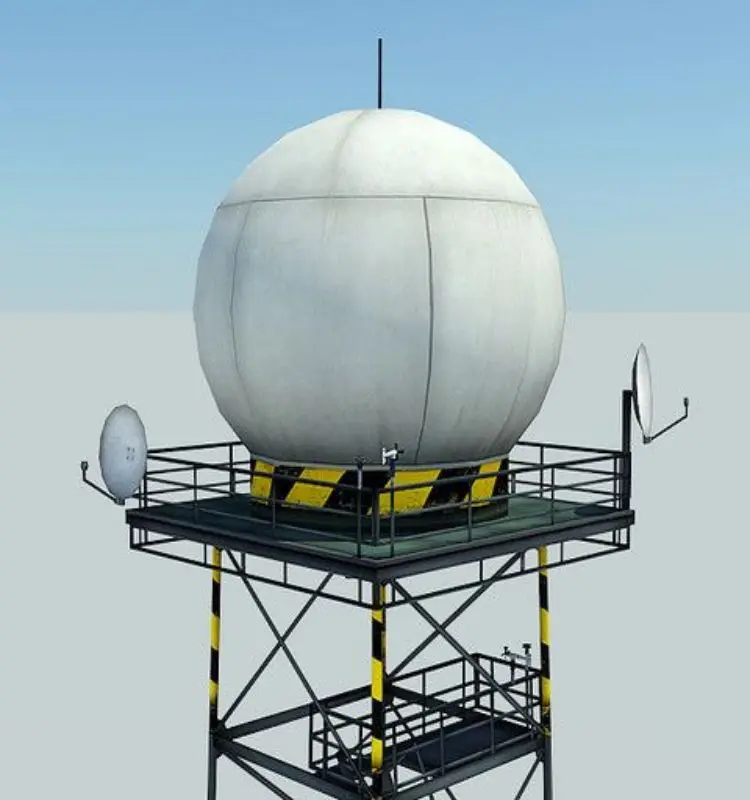
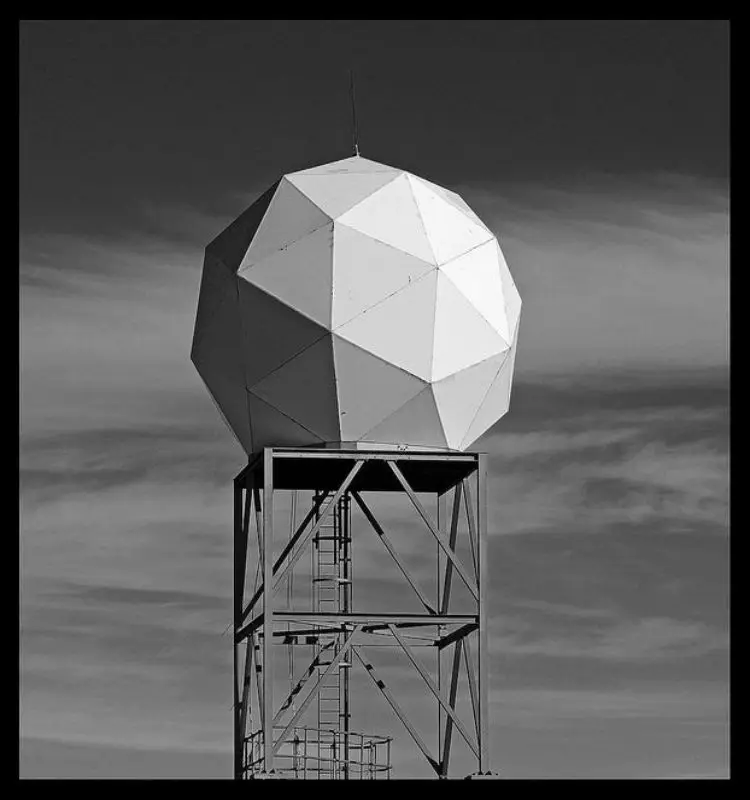
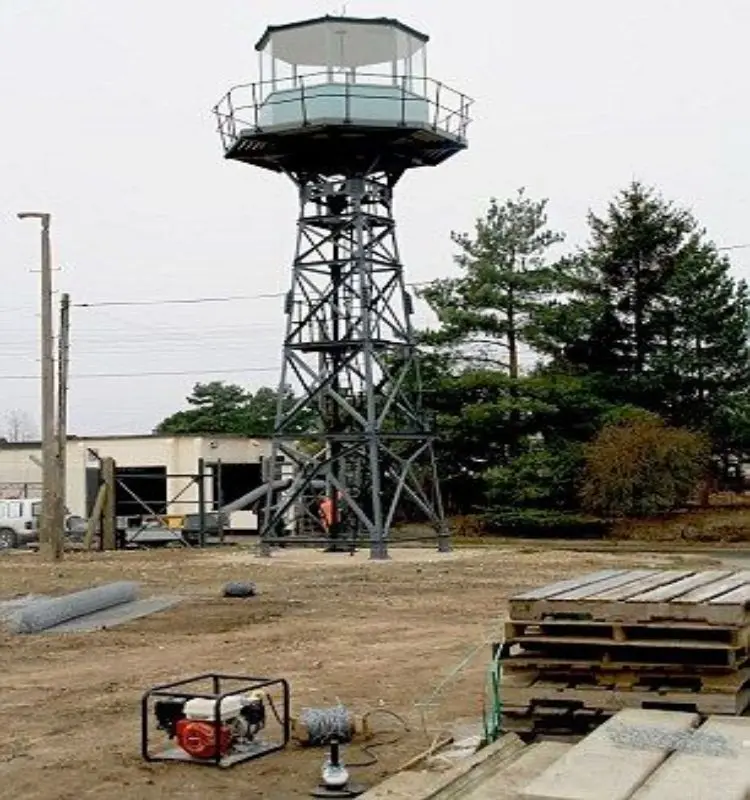
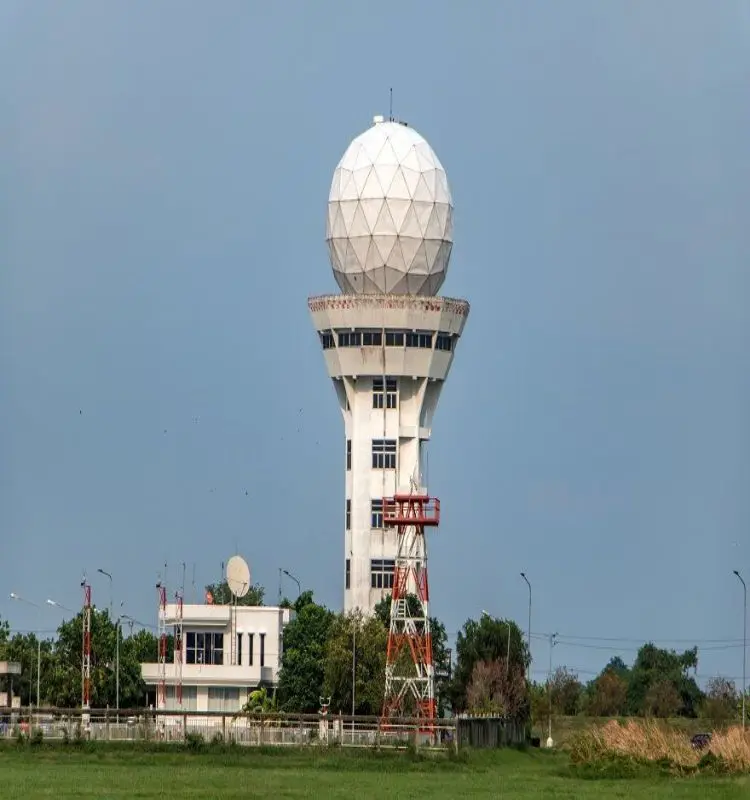
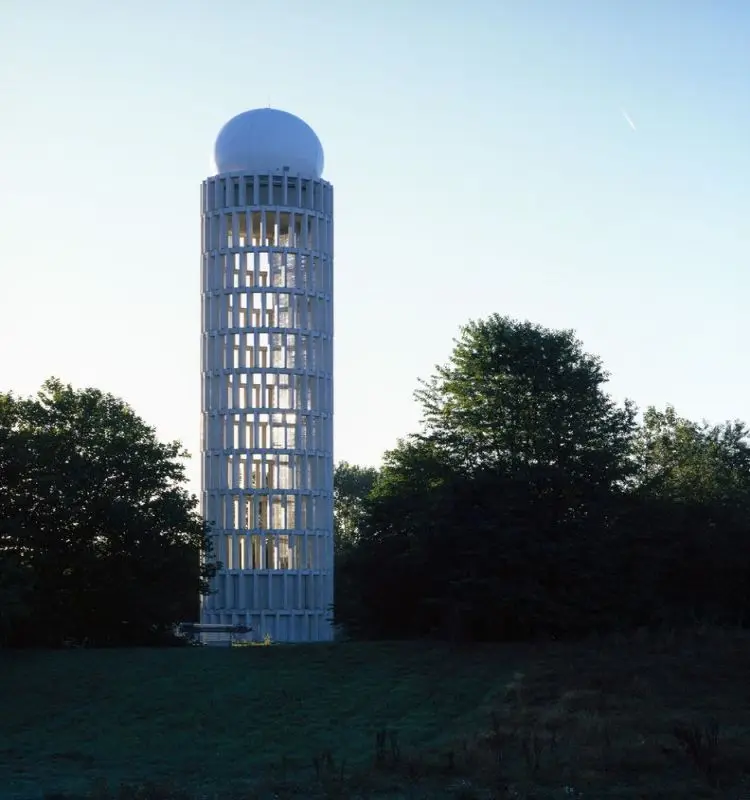

Creative radar towers caters for heights up to 80m, constructed using a selection of tubular and angular members or combined. This
provides the flexibility of global manufacture to facilitate the local sourcing of materials.
The towers are designed to accommodate the following additional features:
1. Radom Interface
2. Radar Unit Interface
3. Top Platforming
4. Day marking Paint
5. Staircase
6. Waveguide Supports
7. Lift
8. Electrics (lighting power)
9. Communications Links
10. High Level Equipment Enclosures
Introduction
In today's rapidly evolving telecommunications landscape, robust infrastructure forms the backbone of reliable communication networks worldwide. The Steel Meteorological Radar Tower for Telecommunication and Communication Antennas represents a pinnacle of engineering excellence, designed to support critical communication equipment in the most demanding environmental conditions. These specialized structures serve as essential platforms for meteorological monitoring systems, telecommunications equipment, and various communication antennas that facilitate seamless connectivity across vast geographical areas.
Modern communication networks require tower solutions that can withstand extreme weather conditions while maintaining structural integrity and operational efficiency. Our steel tower systems provide the perfect foundation for sophisticated radar equipment, enabling accurate weather forecasting, air traffic control, and emergency communication services that communities and industries depend upon daily.
Product Overview
The Steel Meteorological Radar Tower for Telecommunication and Communication Antennas combines advanced metallurgical engineering with precision manufacturing techniques to create a versatile infrastructure solution. These towers feature a robust steel framework construction that provides exceptional load-bearing capacity and wind resistance, making them ideal for supporting heavy meteorological radar equipment and multiple communication antenna arrays simultaneously.
Each tower system incorporates carefully calculated structural elements that distribute weight evenly throughout the framework, ensuring long-term stability and minimal maintenance requirements. The galvanized steel construction offers superior corrosion resistance, extending operational lifespan even in harsh coastal or industrial environments where salt exposure and chemical pollutants pose significant challenges to infrastructure durability.
These communication tower solutions feature modular design principles that allow for flexible configuration options, accommodating various equipment types and mounting requirements. The sophisticated engineering approach ensures compatibility with modern radar systems, satellite communication equipment, cellular network infrastructure, and emergency broadcasting antennas within a single unified platform.
Features & Benefits
Structural Engineering Excellence
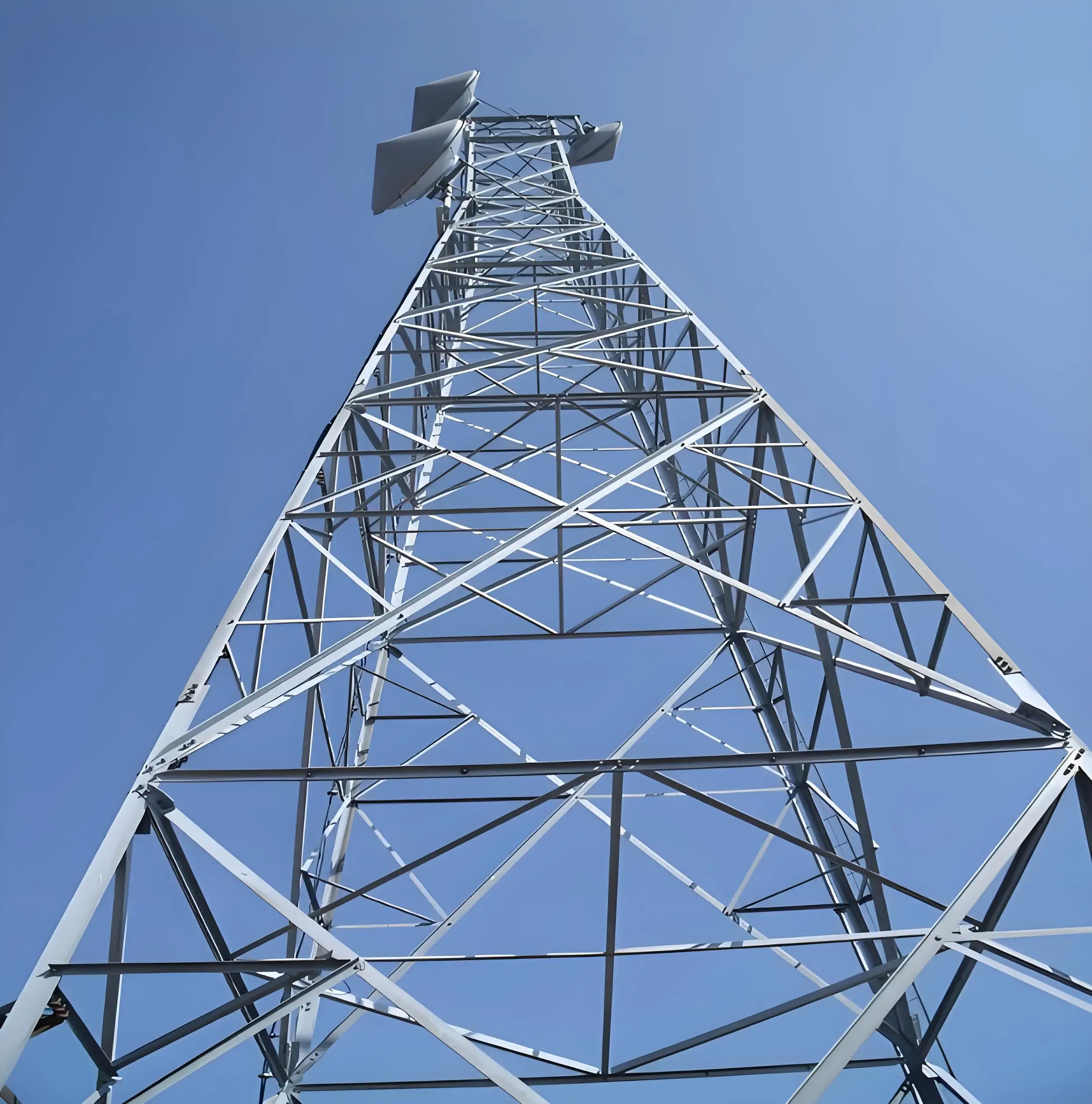
The foundation of every Steel Meteorological Radar Tower for Telecommunication and Communication Antennas lies in its advanced structural engineering design. High-grade steel components undergo precision fabrication processes that ensure dimensional accuracy and superior joint integrity throughout the entire tower assembly. The triangulated framework design provides optimal strength-to-weight ratios while minimizing material usage and construction complexity.
Advanced welding techniques and quality control protocols guarantee that each connection point meets or exceeds industry safety standards. The tower's geometric configuration distributes mechanical stresses efficiently, preventing localized failure points that could compromise overall structural performance during extreme weather events or heavy equipment loading scenarios.
Environmental Resilience
Weather resistance capabilities represent a critical advantage of these specialized tower systems. The steel construction incorporates protective coatings and surface treatments that resist corrosion from rain, snow, ice, and atmospheric pollutants. Hot-dip galvanizing processes create a metallurgical bond between the steel substrate and protective zinc layer, providing decades of maintenance-free corrosion protection.
Temperature fluctuations, humidity variations, and UV exposure are carefully considered during the design phase to ensure consistent performance across diverse climate conditions. The tower structure accommodates thermal expansion and contraction without compromising structural integrity or equipment alignment, maintaining operational precision for sensitive meteorological and communication equipment.
Installation Efficiency
Modular construction methodology significantly reduces on-site installation time and complexity. Pre-engineered components arrive ready for assembly, minimizing field welding requirements and reducing construction delays. Standardized connection systems ensure compatibility between tower sections while maintaining the flexibility to accommodate site-specific requirements and equipment configurations.
The design approach facilitates efficient transportation and handling, allowing tower components to be delivered to remote locations where meteorological monitoring and communication infrastructure are most critically needed. Assembly procedures are streamlined to reduce construction costs while maintaining the highest safety standards for installation personnel.
Applications & Use Cases
Meteorological organizations worldwide rely on these tower systems to support Doppler radar equipment, weather monitoring stations, and atmospheric research instruments. The stable platform provided by steel tower construction ensures accurate data collection for weather forecasting, storm tracking, and climate research applications that require precise equipment positioning and minimal vibration interference.
Telecommunications infrastructure applications include cellular network base stations, microwave communication links, and emergency communication systems. The tower's capacity to support multiple antenna arrays simultaneously makes it an ideal solution for consolidated communication hubs that serve rural communities, industrial facilities, and transportation corridors where reliable connectivity is essential for safety and operational efficiency.
Airport and aviation facilities utilize these towers for air traffic control radar systems, navigation aids, and communication equipment that ensure safe aircraft operations. The tower's height capabilities and structural stability meet stringent aviation requirements while providing the flexibility to accommodate evolving technology upgrades and expanded communication needs.
Emergency services and disaster response organizations depend on these communication towers to maintain critical communications during natural disasters and emergency situations. The robust construction withstands severe weather conditions that might disable other infrastructure, ensuring that emergency communications remain operational when communities need them most.
Quality Control & Compliance
Manufacturing excellence begins with rigorous material selection processes that ensure only premium-grade steel components enter the production workflow. Each steel section undergoes comprehensive testing procedures to verify mechanical properties, chemical composition, and dimensional accuracy before fabrication begins. Advanced quality management systems track every component throughout the manufacturing process, maintaining complete traceability and documentation for regulatory compliance.
International engineering standards guide every aspect of design and manufacturing, ensuring compatibility with global infrastructure requirements and safety regulations. The towers meet or exceed structural engineering codes for wind loading, seismic resistance, and equipment mounting requirements established by recognized international organizations and national regulatory bodies.
Third-party inspection services validate manufacturing quality and compliance with specified engineering requirements. Independent verification processes include material certification, welding inspections, dimensional validation, and surface treatment quality assessments that provide customers with confidence in product reliability and performance.
Environmental compliance extends beyond product performance to include sustainable manufacturing practices and material sourcing. Steel components are sourced from certified suppliers who maintain responsible environmental practices, and manufacturing processes incorporate energy-efficient technologies that minimize environmental impact while maintaining production quality.
Customization & Branding Options
Engineering flexibility allows for extensive customization of the Steel Meteorological Radar Tower for Telecommunication and Communication Antennas to meet specific project requirements and site conditions. Custom height configurations, equipment mounting arrangements, and structural modifications can be incorporated during the design phase to optimize performance for particular applications and environmental conditions.
Equipment integration services ensure compatibility with existing communication systems and meteorological instruments. Custom mounting brackets, cable management systems, and equipment platforms can be designed to accommodate specific radar systems, antenna arrays, and auxiliary equipment while maintaining structural integrity and operational accessibility.
Surface finish options extend beyond standard galvanizing to include custom color schemes, specialized coatings, and branding elements that meet organizational requirements or regulatory specifications. Aviation marking requirements, visibility enhancements, and aesthetic considerations can be incorporated without compromising structural performance or durability.
Foundation design customization accommodates varying soil conditions, seismic requirements, and site constraints. Engineering teams work closely with customers to develop optimized foundation solutions that ensure long-term stability while minimizing construction complexity and site preparation requirements.
Packaging & Logistics Support
Comprehensive packaging solutions protect tower components during international shipping and handling operations. Steel sections are carefully bundled and secured using protective materials that prevent damage during transportation while optimizing container utilization for cost-effective global delivery. Packaging design considers the specific requirements of different transportation modes, including ocean freight, rail transport, and overland trucking.
Documentation packages accompany every shipment, including detailed assembly drawings, component identification guides, and installation instructions translated into local languages as required. Complete parts inventories and quality certificates provide customers with the information needed for efficient customs clearance and project planning.
Logistics coordination services support complex international projects by managing shipping schedules, customs documentation, and delivery coordination to remote installation sites. Experienced logistics teams understand the unique requirements of infrastructure projects and work proactively to prevent delays and minimize transportation costs.
Technical support extends throughout the delivery process, with engineering teams available to address questions about component handling, storage requirements, and assembly procedures. Remote consultation services and on-site support options ensure that customers have access to expert guidance throughout the installation process.
Why Choose Us
Our organization brings decades of specialized experience in designing and manufacturing communication tower solutions for international markets, establishing a reputation for engineering excellence and customer satisfaction across diverse industries and geographical regions. This extensive background enables us to understand the unique challenges faced by meteorological organizations, telecommunications providers, and infrastructure developers worldwide.
As a recognized metal packaging manufacturer and infrastructure solutions provider, we leverage advanced manufacturing capabilities and quality management systems to deliver consistently superior products. Our global collaboration network includes partnerships with leading engineering firms, equipment manufacturers, and installation contractors who share our commitment to excellence and innovation in communication infrastructure development.
The combination of technical expertise, manufacturing excellence, and customer-focused service delivery distinguishes our approach to supporting Steel Meteorological Radar Tower for Telecommunication and Communication Antennas projects. Multi-industry expertise enables us to address the diverse requirements of weather monitoring organizations, telecommunications companies, aviation authorities, and emergency services organizations with equal proficiency and attention to detail.
Continuous improvement initiatives and investment in advanced manufacturing technologies ensure that our tower solutions remain at the forefront of industry innovation. Research and development efforts focus on enhancing structural performance, reducing installation complexity, and incorporating sustainable materials and processes that benefit both customers and environmental stewardship objectives.
Conclusion
The Steel Meteorological Radar Tower for Telecommunication and Communication Antennas represents the convergence of advanced engineering, superior materials, and manufacturing excellence in creating infrastructure solutions that enable reliable communication and weather monitoring services worldwide. These tower systems provide the foundation for critical applications ranging from weather forecasting and emergency communications to cellular networks and aviation safety systems.
Through careful attention to structural design, environmental resilience, and operational flexibility, these towers deliver long-term value for organizations investing in communication infrastructure. The combination of robust construction, customization capabilities, and comprehensive support services ensures that each installation meets specific performance requirements while providing decades of reliable service in demanding operational environments.
Product Description

Civil Aviation, Military Tower, Weather & Meteorological Radar Tower,Airport Radar Tower

Title goes here.
Design Wind Speed: up to 330 km/hr Custom design to Client requirement
Design Criteria Standard
The design criteria are based on an extensive research on Radar antenna supporting structures fulfilling the majority of technical
specifications and requirements of Radar applications.
International Design Standards and Codes such as (TIA-EIA 222G 2015, BS8100, AS3995, Eurocode 3 EN-1993, etc) are used.
Final Materials Finishes Hot dipped Galvanised to BS729 or ASTM 123 standards
Bolts and Nuts All the connections in the field shall be made with galvanized Grade 8.8 steel bolts, each fitted with one spring washer. For Further information, inquires and customized design solutions for Broadcast supporting structures please contact engineer.
Design Criteria Standard
The design criteria are based on an extensive research on Radar antenna supporting structures fulfilling the majority of technical
specifications and requirements of Radar applications.
International Design Standards and Codes such as (TIA-EIA 222G 2015, BS8100, AS3995, Eurocode 3 EN-1993, etc) are used.
Final Materials Finishes Hot dipped Galvanised to BS729 or ASTM 123 standards
Bolts and Nuts All the connections in the field shall be made with galvanized Grade 8.8 steel bolts, each fitted with one spring washer. For Further information, inquires and customized design solutions for Broadcast supporting structures please contact engineer.


Specification
item |
value |
Model Number |
JH-radar tower |
Type |
Meteorological radar tower |
Brand Name |
JH-radar tower |
Place of Origin |
China |
Hebei |
|
Product name |
Radar Tower |
Material |
Steel Q345/Q235 |
Surface treatment |
Hot Dip Galvanised |
Height |
5-100m/customized |
Wind Speed |
0-330km/h |
Platform |
Every section/stage/customized |
Lifetime |
50 Years |
Related Products
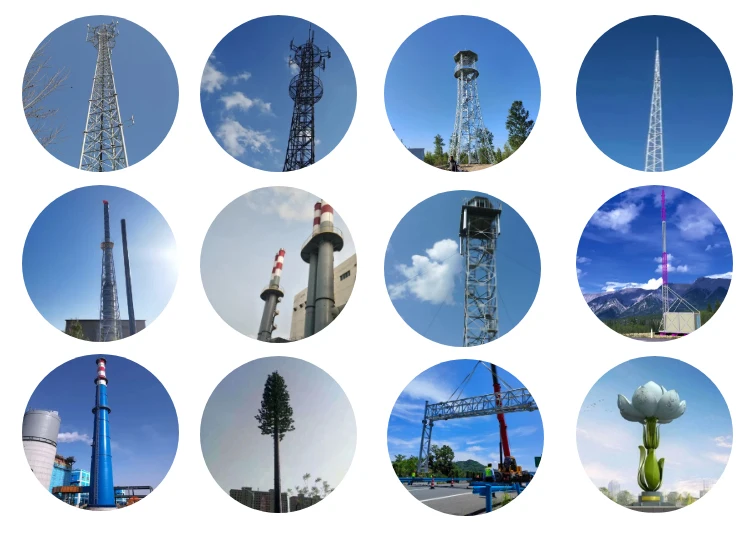
The factory specializes in the production of various types of towers, communication towers, lightning protection towers, decorative towers, industrial towers, watch towers and other towers. Accept processing customization, can be customized according to drawings, can be designed according to customer requirements.
Welcome to consult and look forward to working with you.
whatsapp: +86 13653188820
Company Profile
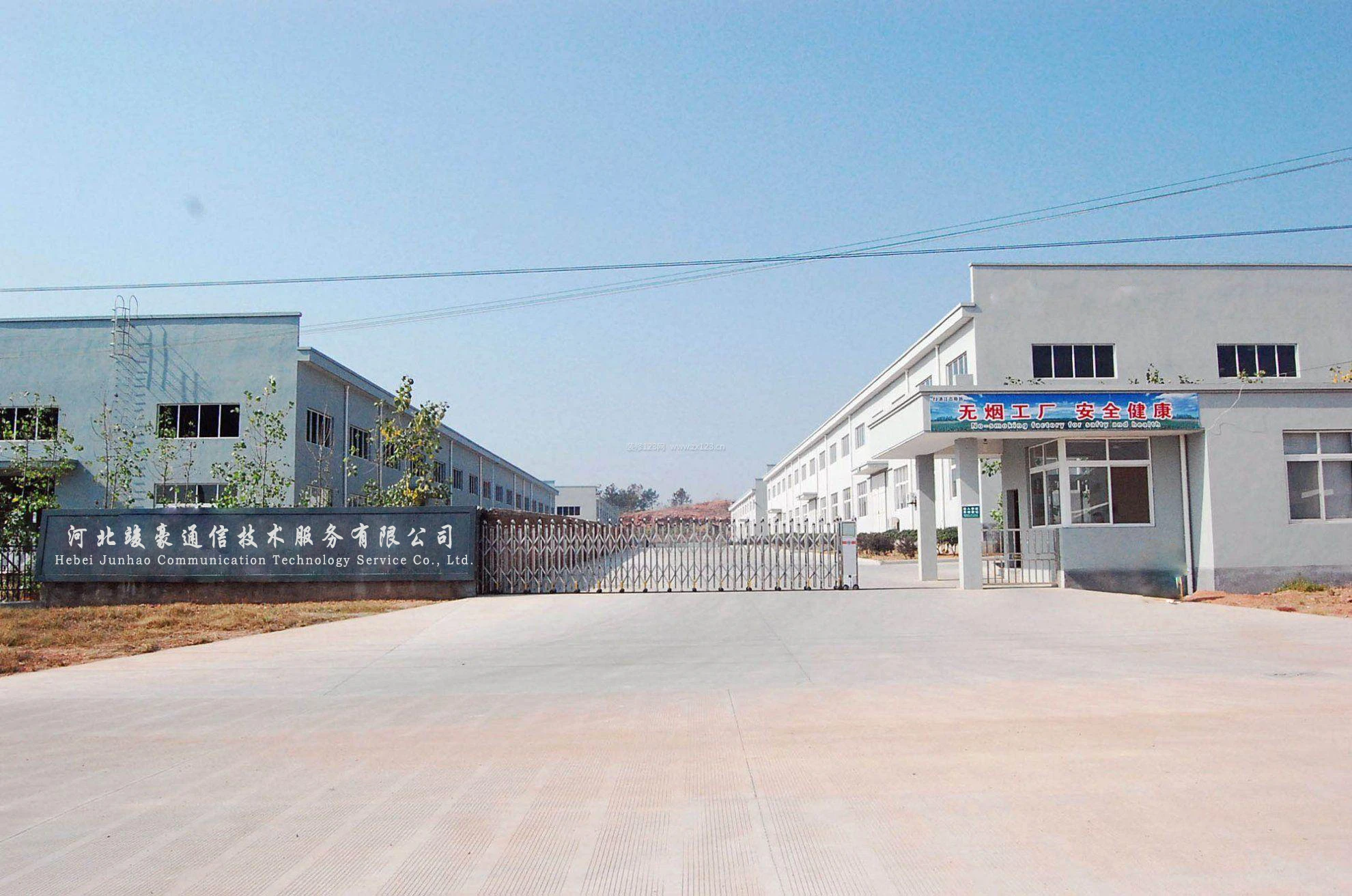
Hebei Junhao Communication Technology Service Co., Ltd. is a leading professional manufacturer and exporter in the field of 3-4 legged angular steel towers, 3-4 legged tubular steel towers and monopole towers, and our main products are microwave communication towers, broadcast and television towers, transmission lines towers, craft decorative towers, etc, which are widely used in domains of mobile, unicom, telecom, broadcast and television, and electricity. Our towers are facing immense demands from very corner of the globe due to our commitment to high-quality services and our competitive prices Our company is a new and high-tech enterprise in China, which has attained approval certificate of ISO9001 international quality system. Supported by the team of professional engineers, technicians, skill workers, we successfully undertake designing, fabrication, galvanizing and erection work of towers. Steel towers workshops professionally produce transmission line steel towers, and telecommunication towers, and we have gained a full set of Manufacturing Licenses of Transmission Tower & Microwave Telecommunication Tower. The annual output has reached 100000tons. Our company possesses different kinds of advanced equipment for producing and testing. The high-level automation and specialization greatly improve the superiority rate and the precision. Galvanization workshops have the
first class scale and output in China, adopting the advanced automatically controlled assembly lines of hot dipped galvanization.The new-type products have features of surface reinforcement, surface prevention and surface beautification.
first class scale and output in China, adopting the advanced automatically controlled assembly lines of hot dipped galvanization.The new-type products have features of surface reinforcement, surface prevention and surface beautification.
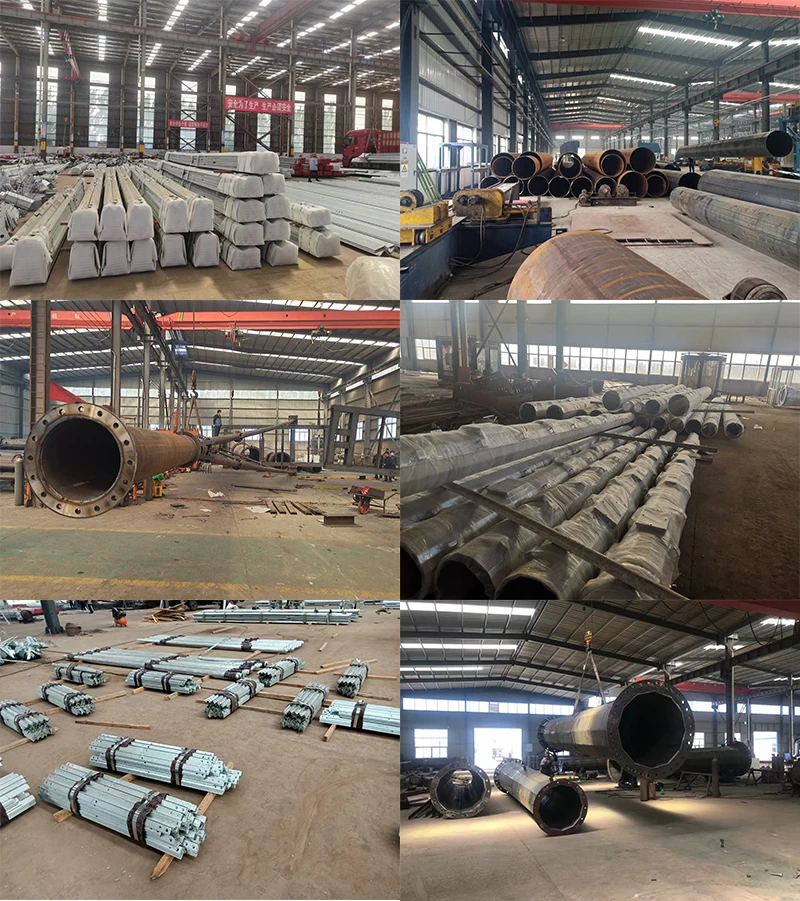
Inside the factory
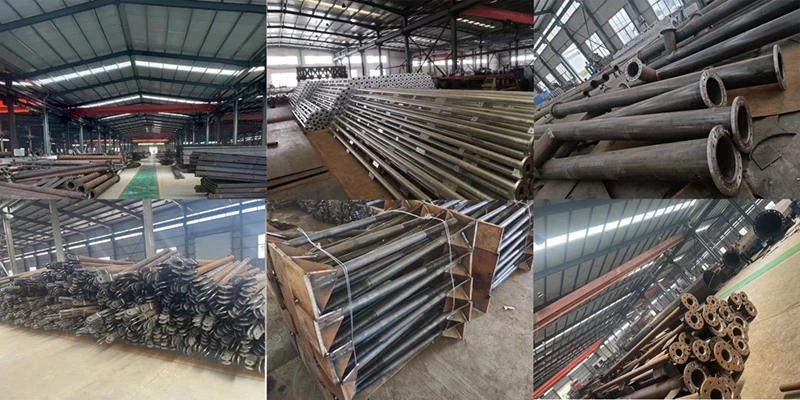
In stock
Why Choose Us

Shipping and Packaging

FAQ
1. Is the tower's structure unitary?
No, we can design and produce it as customer's request.
2. Manufacturer or trade company?
We are manufacturer and have own factory, and welcome to visit our factory.
3. Delivery time?
Usually, within 20day. And we produce and ship product according to buyer's request.
4. How long does the service life for steel tower?
We can assured more than 30years' service life.
5. For assembly, is it very complex and is there a assembly book or guidance?
We will provide assembly drawing with shipping the cargo.
No, we can design and produce it as customer's request.
2. Manufacturer or trade company?
We are manufacturer and have own factory, and welcome to visit our factory.
3. Delivery time?
Usually, within 20day. And we produce and ship product according to buyer's request.
4. How long does the service life for steel tower?
We can assured more than 30years' service life.
5. For assembly, is it very complex and is there a assembly book or guidance?
We will provide assembly drawing with shipping the cargo.